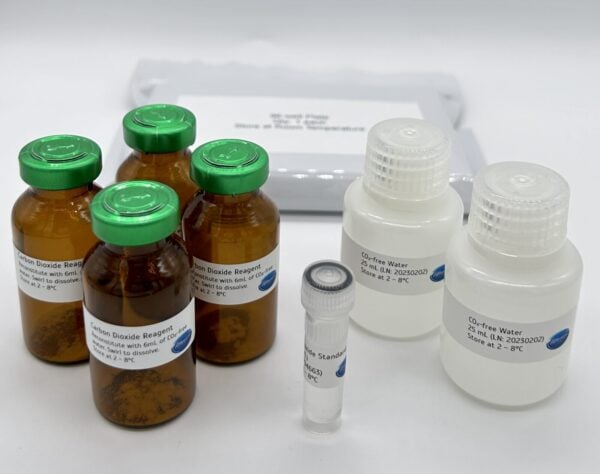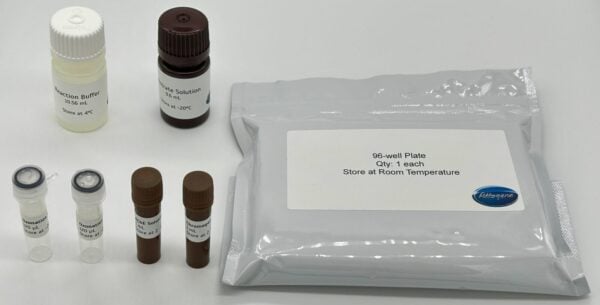


The Attogene ELISA (Do-it-yourself) Development Starter Kit is an ELISA development starter kit for proof-of-concept assay development and optimization. It supplies 96-well strip microplates plus the coating, blocking, stabilizing, diluent, wash, TMB substrate and stop reagents needed to coat your own plates and run an HRP-TMB readout in direct, indirect, sandwich or competitive format.
You provide the analyte and antibodies; the kit provides the plates and buffers, so you can focus on optimizing coating, blocking and antibody titers.
Key Features
- Supports all common ELISA formats: Direct, indirect, sandwich and competitive (inhibition) assays using HRP-TMB signal amplification.
- Coat and store your own plates: Includes coating buffer, blocking solution, stabilizer and foil pouch bags with desiccant for preparing dried, stored plates.
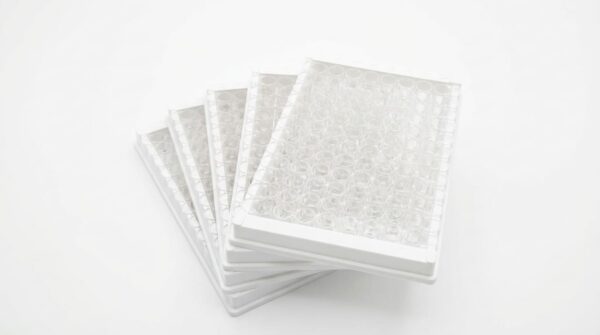
- High-binding strip plates: 96-well microplates with 12 breakable strips of 8 wells and a high-binding surface suitable for passive adsorption of antibodies and antigens.
- Filtered buffers: Diluents and buffers are aseptically filtered through a 0.2-micron filter into clean, pre-sterilized containers.
- Ready out of the box: No reagent formulation is needed before you start optimizing.
What’s in the Kit
Each ELISA development starter kit includes the following, as listed on the specification sheet:
- 96-well strip microplate, 5 plates (room temperature)
- Coating Buffer, 150 mL (4°C)
- Blocking Solution, 100 mL (4°C)
- Stabilizer, 100 mL (4°C)
- 10X Wash Buffer, 250 mL (room temperature)
- Assay Diluent, 250 mL (4°C)
- Detection Diluent, 250 mL (4°C)
- TMB, 60 mL (4°C)
- Stop Solution, 100 mL (room temperature)
- Foil pouch bags with desiccant, 5 (room temperature)
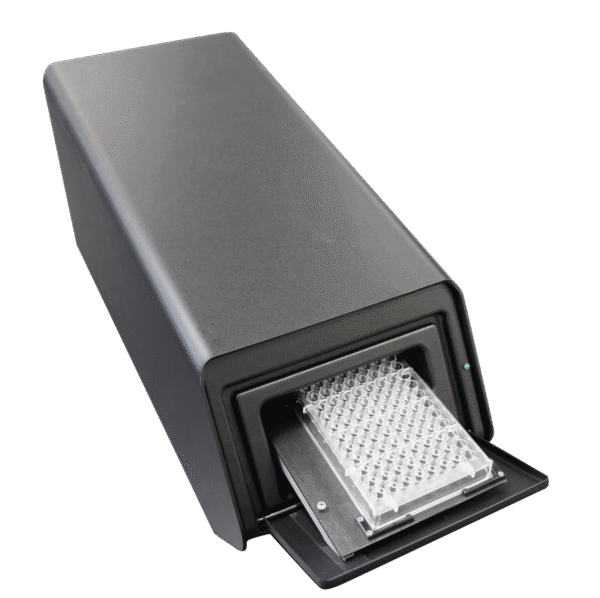
You will also need: the plate coating reagent (your analyte), primary antibody, secondary antibody or HRP-conjugated antibody or binder for detection, an ELISA reader (450 nm/630 nm) such as our Chromate 4300 microplate reader, deionized water, a vortex mixer, centrifuge, timer, wash bottle, 50 mL and 2 mL polystyrene centrifuge tubes, 20 to 200 µL and 100 to 1000 µL micropipettes with tips, and an 8-channel pipette (50, 100 and 150 µL).
Who It’s For
- Researchers turning a new antibody or antigen into a first working ELISA
- Assay developers comparing direct, indirect, sandwich and competitive formats for the same target
- Labs that want to coat and store their own plates in house
- Small molecule and protein assay projects that need an HRP-TMB platform for optimization
How to Use the ELISA Development Starter Kit
The specification sheet covers plate preparation, standard preparation and both two-step and one-step assay protocols. In summary:
- Coat. Dilute your coating analyte in 1X Coating Buffer (typically 0.1 to 1 µg/mL, optimized empirically), add 100 µL per well and incubate at 4°C for 16 to 20 hours, protected from light.
- Wash and block. Aspirate, wash twice with 300 µL of 1X Wash Buffer, then add 120 µL of Blocking Solution and incubate at 37°C for at least 3 hours.
- Stabilize and dry. Add 100 µL of Stabilizer for 30 minutes at room temperature, pour off, dry the plate in a flow hood for 3 hours, then seal it in a foil pouch with desiccant and store at 4°C.
- Prepare standards. Make fresh standards immediately before each run. A 7-point curve of 2-fold serial dilutions, run in at least duplicate, is recommended.
- Run the assay. Bring all reagents to room temperature for more than 30 minutes. In the two-step protocol, add 50 µL of standard or sample and 100 µL of Antibody #1, incubate 30 minutes at room temperature, wash three times with 250 µL, then add 150 µL of HRP-conjugated Antibody #2 for another 30 minutes and wash again. The one-step protocol adds 150 µL of an HRP-conjugated binder to 50 µL of standard or sample in a single 30-minute incubation.
- Develop and read. Add 100 µL of TMB for 15 minutes at 25°C, covered, then 100 µL of Stop Solution, and read absorbance at 450 nm within 5 minutes.
Full details are in the ELISA Development Starter Kit specification sheet. Return unused strips to the foil pouch at 2 to 8°C between runs.
Choosing an ELISA Format
Direct: a labeled primary antibody detects antigen coated on the plate. Indirect: a primary antibody binds the antigen and a labeled secondary antibody detects the primary. Sandwich: a capture antibody and a detection antibody bind the target, and the spec sheet describes this as the most robust and sensitive format. Competitive: target antigen competes with a reference antigen for the detection antibody, so signal is inversely proportional to target concentration.
Some proteins or molecules may also need to be attached to a carrier protein such as BSA before coating, and reagent compatibility should be confirmed before adding organic solvents.
If you would rather skip plate coating, our pre-coated plates work with the same assay logic: goat anti-rabbit coated ELISA plates for rabbit polyclonal capture, streptavidin coated ELISA plates for biotinylated reagents, and anti-FITC or anti-DIG coated ELISA plates for labeled nucleic acids. Complete ready-to-run kits include the Universal Nucleic Acid ELISA Kit for amplification products and our biotin (vitamin B7) quantification kits.
Frequently Asked Questions
Does the ELISA development starter kit include antibodies?
No. The ELISA development starter kit supplies plates, buffers, TMB and stop solution. You provide the coating analyte, primary and secondary antibodies or HRP-conjugated detection reagent.
Which ELISA formats does the kit support?
Direct, indirect, sandwich and competitive formats, all using an HRP-TMB signal system.
What plate reader do I need?
An ELISA reader with 450 nm and 630 nm filters. The assay protocols read absorbance at 450 nm within 5 minutes of adding Stop Solution.
Can I store coated plates?
Yes. After coating, blocking, stabilizing and drying, place plates or strips in a foil pouch with a desiccant bag and store at 4°C until use. The kit includes 5 foil pouch bags with desiccant.
What should I optimize first?
The spec sheet recommends testing coating concentrations, blocking times and drying times, and determining antibody dilutions empirically. Long incubations, incompatible buffers or reagents, wrong dilutions and insufficient blocking are common causes of nonspecific results.
For research use only. Not for use in diagnostic procedures. Questions? Call 512-333-1330 or email sales@attogene.com.