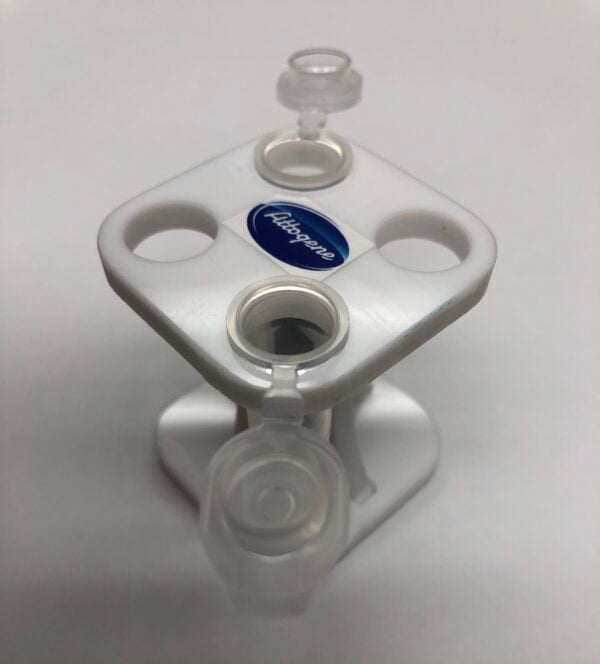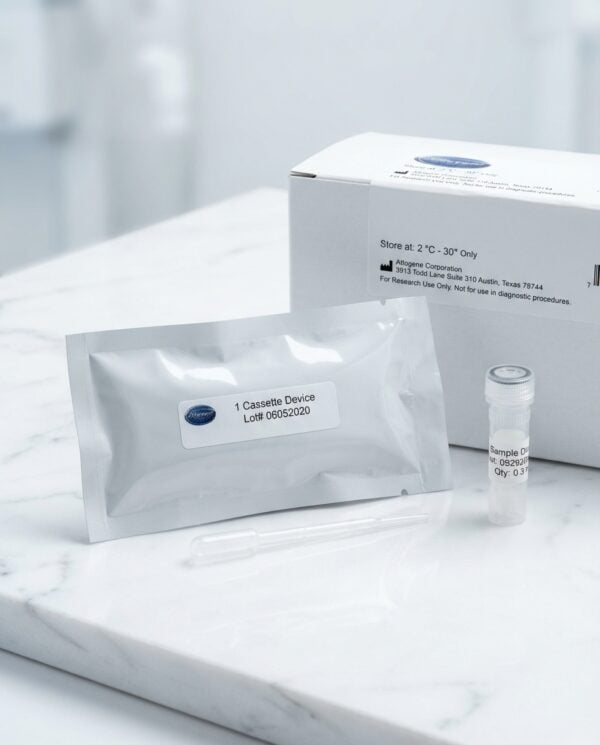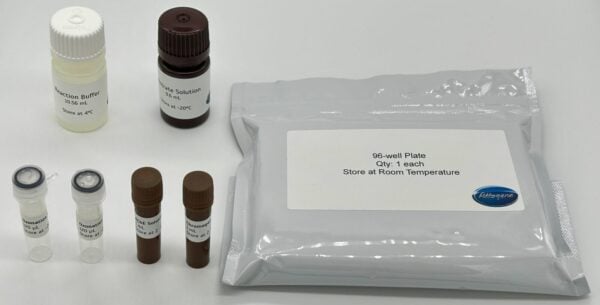


Attogene Mouse Anti FAM/FITC Coated ELISA Plates are anti-FITC coated ELISA plates built for capturing FAM- or FITC-tagged nucleic acids in a wide range of ELISA and assay procedures. Each well is coated with 500 ng of a monoclonal anti-FAM/FITC antibody and blocked with nuclease-free BSA, giving you a ready-to-use surface for developing qualitative or quantitative nucleic acid detection systems.
The plates are polystyrene, 96-well (8 x 12) strip plates with a 50 to 300 µL working volume and an 18-month shelf life from the date of manufacture. They work well for detecting amplified DNA products from PCR, LAMP and RPA reactions when one primer carries a FAM/FITC label and the other carries biotin.
Key Features
- High binding capacity: Designed for reliable results in nucleic acid assays without coating and blocking your own ELISA plates.
- Defined coating: 500 ng per well of anti-FAM/FITC antibody, applied by adsorption.
- Nuclease-free blocking: Pre-blocked with nuclease-free BSA to protect nucleic acid targets.
- Gentle immobilization: The anti-FAM/FITC antibody is bound without denaturing protein components.
- Low nonspecific binding: Helps keep background low, supporting assay sensitivity and accuracy.
- Lot-tested: Every lot is checked for uniform coating, background signal, plate integrity and functional FAM/FITC binding.
- Ready to use: Pre-blocked and ready for immediate use, saving setup time.
Specifications
Each order of anti-FITC coated ELISA plates includes plates with these specifications:
- Coating: Mouse monoclonal anti-FAM/FITC antibody, 500 ng per well
- Binding property: Standard capacity, affinity plate
- Binding method: Adsorption
- Blocking: Nuclease-free BSA
- Material: Polystyrene
- Wells and format: 96 wells (8 x 12), strip plate
- Working volume: 50 to 300 µL
- Pack sizes: 5 Pack or 20 Pack (catalog number EL2059)
- Shelf life: 18 months from date of manufacture
- Storage: Store at 4°C in the provided resealable pouches with desiccant; shipped at room temperature
Quality control: Wells are clear, colorless and free of foreign matter and scratches. Tested with a FAM/FITC-tagged nucleic acid system, each test plate must show an average CV of 10% or less, an average signal-to-noise ratio of 5 or more, and a plate-to-plate CV of 10% or less.
Who It’s For
- Molecular biology labs converting PCR, LAMP or RPA amplification into a plate-based colorimetric readout
- Assay developers building qualitative or quantitative nucleic acid detection systems
- Researchers who want a nuclease-free, pre-blocked capture surface instead of coating plates in house
- Kit developers prototyping amplicon detection formats before moving to other platforms
How to Use Anti-FITC Coated ELISA Plates in Your Assay
Detection of DNA or RNA targets requires a biotin-labeled primer and a FAM/FITC-labeled primer during amplification. Optimize sample dilution, incubation times and detection reagent concentration for your system. A typical workflow:
- Amplify. Run PCR, LAMP or RPA with one FAM/FITC-labeled primer and one biotin-labeled primer so the product carries both labels.
- Prepare strips. Remove the strips you need and return unused strips to the resealable pouch with desiccant at 4°C.
- Capture. Add the amplified product, diluted in a suitable buffer, within the 50 to 300 µL working volume and incubate so the anti-FAM/FITC antibody can capture it.
- Wash. Remove unbound material with your ELISA wash buffer.
- Detect. Add a streptavidin-enzyme conjugate, such as streptavidin-HRP, to bind the biotin label. Incubate and wash.
- Develop and read. Add substrate, stop the reaction if required, and read absorbance on a plate reader. Include no-template controls to set your background.
A specification sheet for EL2059 is available for download.
How Dual-Label Amplicon Detection Works
FAM and FITC are closely related fluorescein labels, and the coated antibody recognizes both. When one amplification primer carries FAM/FITC and the other carries biotin, only full-length product that incorporates both primers links the plate surface to the detection reagent. The anti-FAM/FITC coating captures the product, and a streptavidin conjugate binds the biotin end to generate signal.
The same plate can support other FAM/FITC-labeled molecules, including labeled antibodies, so it can serve as a general capture surface for FAM/FITC-based ELISA development. For other label pairs, see our anti-DIG coated ELISA plates and streptavidin coated ELISA plates; our biotin (vitamin B7) quantification kits can help check biotin labeling. If you prefer a complete kit with standards and detection reagents, the Universal Nucleic Acid ELISA Kit uses this capture format. For antibody-based assays, see our goat anti-rabbit coated ELISA plates or the ELISA development starter kit.
Frequently Asked Questions
What labels do anti-FITC coated ELISA plates capture?
Anti-FITC coated ELISA plates are coated with a monoclonal anti-FAM/FITC antibody, so they capture molecules tagged with either FAM or FITC.
Can I detect RNA as well as DNA?
Yes. Detection of DNA or RNA targets requires amplification with a biotin-labeled primer and a FAM/FITC-labeled primer, so the amplified product carries both labels. RNA targets are typically converted with a reverse-transcription step as part of amplification.
Which amplification methods are compatible?
The plates can be used to develop ELISAs for amplified DNA products from PCR, LAMP and RPA reactions.
How should the plates be stored?
Store at 4°C upon receipt and keep plates in the provided resealable pouches with desiccant. Plates ship at room temperature and have an 18-month shelf life from the date of manufacture.
What quality checks are performed?
Each lot of anti-FITC coated ELISA plates is tested for uniform coating, background signal, plate integrity and functional FAM/FITC binding, with CV and signal-to-noise acceptance limits listed on the specification sheet.
For research use only. Not for use in diagnostic procedures. Questions? Call 512-333-1330 or email sales@attogene.com.