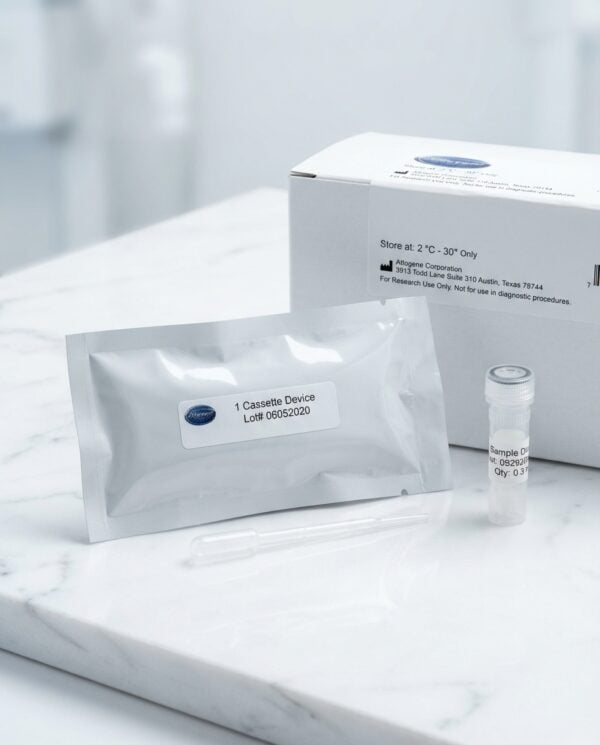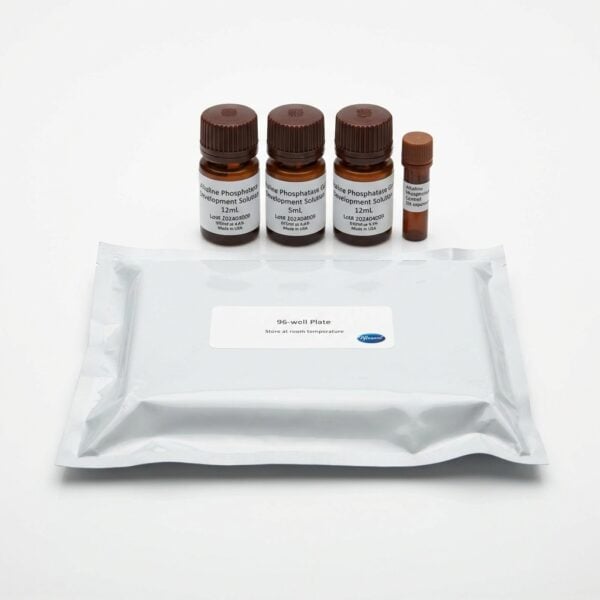


Attogene Mouse Anti Digoxigenin (DIG) Coated ELISA Plates are anti-DIG coated ELISA plates that capture digoxigenin-labeled nucleic acids and antibodies in a wide range of ELISA and assay procedures. Each well carries 200 ng of a monoclonal anti-digoxigenin antibody and is pre-blocked with nuclease-free BSA, so the plate is ready for nucleic acid assay development as soon as it arrives.
These 96-well (8 x 12) polystyrene strip plates accept a 50 to 300 µL working volume and have an 18-month shelf life from the date of manufacture. Paired with a biotin-labeled primer and a DIG-labeled primer during amplification, they turn PCR, LAMP or RPA products into a colorimetric plate readout.
Key Features
- DIG-specific capture: 200 ng per well of monoclonal anti-digoxigenin antibody, immobilized by adsorption.
- No coating or blocking needed: High binding capacity without preparing and blocking your own ELISA plates.
- Nuclease-free BSA block: Pre-blocked to suit DNA and RNA amplification workflows.
- Gentle immobilization: The capture antibody is bound without denaturing protein components.
- Low background: Low nonspecific binding supports assay sensitivity and accuracy.
- Lot-tested performance: Each lot is checked for uniform coating, background signal, plate integrity and functional DIG binding.
- Flexible strip format: Run only the strips you need and keep the rest sealed.
Specifications
Each order of anti-DIG coated ELISA plates includes plates with these specifications:
- Coating: Mouse monoclonal anti-digoxigenin antibody, 200 ng per well
- Binding property: Standard capacity, affinity plate
- Binding method: Adsorption
- Blocking: Nuclease-free BSA
- Material: Polystyrene
- Wells and format: 96 wells (8 x 12), strip plate
- Working volume: 50 to 300 µL
- Pack sizes: 5 Pack or 20 Pack (catalog number EL2060)
- Shelf life: 18 months from date of manufacture
- Storage: 4°C in the provided resealable pouches with desiccant; shipped at room temperature
Acceptance criteria: All wells are clear, colorless and free of foreign matter and scratches. Using a DIG-tagged nucleic acid system, the average CV of each test plate must be 10% or less, the average signal-to-noise ratio 5 or greater, and the plate-to-plate CV 10% or less.
Who It’s For
- Researchers adding a plate-based readout to PCR, LAMP or RPA amplification
- Assay developers who already use digoxigenin labels in probes or primers
- Labs running multi-label designs that need a capture surface separate from FAM/FITC
- Kit developers who want a consistent, lot-tested plate for prototype nucleic acid ELISAs
How to Use Anti-DIG Coated ELISA Plates in Your Assay
Detection of DNA or RNA targets requires a biotin-labeled primer and a DIG-labeled primer during amplification. Sample dilution, incubation times and detection reagent concentration should be optimized for your system. A typical workflow:
- Label during amplification. Include one DIG-labeled primer and one biotin-labeled primer in your PCR, LAMP or RPA reaction.
- Prepare strips. Take out the strips you need and reseal the remainder in the pouch with desiccant at 4°C.
- Capture the product. Add the diluted amplification product to the wells, staying within the 50 to 300 µL working volume, and incubate.
- Wash. Remove unbound material with your ELISA wash buffer.
- Add detection reagent. Add a streptavidin-enzyme conjugate, such as streptavidin-HRP, to bind the biotin label. Incubate, then wash.
- Develop and read. Add substrate, stop if required, and read absorbance on a plate reader. Run no-template controls alongside samples.
Download the EL2060 specification sheet for full plate specifications.
Why Use a Digoxigenin Label
Digoxigenin is a small plant-derived steroid hapten that is not normally present in animal samples, which makes it a widely used tag for nucleic acid probes and primers. An anti-digoxigenin antibody on the plate surface captures any DIG-tagged molecule, while a biotin label on the other end of the amplicon links it to a streptavidin-enzyme conjugate for signal.
Because DIG and FAM/FITC are distinct labels, the anti-DIG plate pairs naturally with our anti-FITC coated ELISA plates when you want to compare label strategies or run separate targets. Biotin-based capture is available with our streptavidin coated ELISA plates, and our biotin (vitamin B7) quantification kits can help check biotin labeling. The Universal Nucleic Acid ELISA Kit offers a complete kit with anti-DIG plate, standards and detection reagents. For antibody-based assays, see our goat anti-rabbit coated ELISA plates or the ELISA development starter kit.
Frequently Asked Questions
What do anti-DIG coated ELISA plates capture?
Anti-DIG coated ELISA plates capture digoxigenin-labeled molecules, including DIG-labeled nucleic acids and DIG-labeled antibodies.
How much antibody is coated per well?
Each well is coated with 200 ng of monoclonal anti-digoxigenin antibody and blocked with nuclease-free BSA.
Which amplification methods can I use?
The plates can be used to develop ELISAs for amplified DNA products from PCR, LAMP and RPA reactions. RNA targets are typically converted with a reverse-transcription step as part of amplification.
How should I store the plates?
Store at 4°C on receipt, inside the resealable pouches with desiccant. The plates ship at room temperature and have an 18-month shelf life from the date of manufacture.
How is each lot tested?
Every lot of anti-DIG coated ELISA plates is tested for uniform coating, background signal, plate integrity and functional DIG binding using a DIG-tagged nucleic acid system.
For research use only. Not for use in diagnostic procedures. Questions? Call 512-333-1330 or email sales@attogene.com.