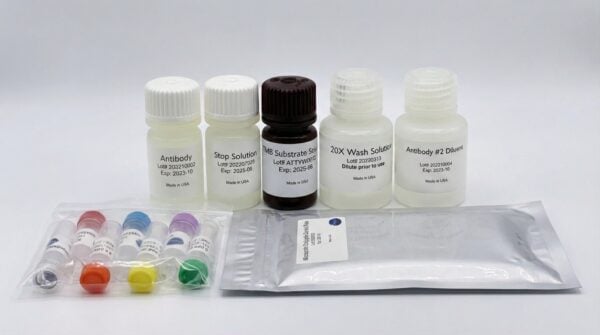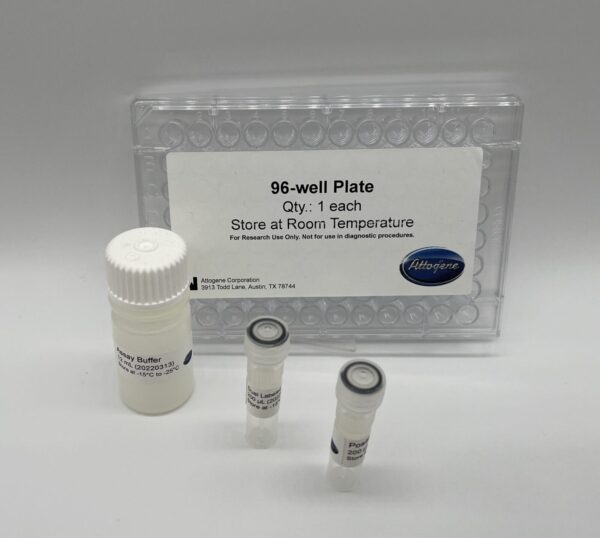


The Alkaline Phosphatase Assay Kit is a plate-based colorimetric assay for measuring alkaline phosphatase (ALP) enzyme activity in research samples, read at 590 nm and reported in IU/L. It contains enough material to test 42 samples in duplicate, includes an ALP standard equivalent to 50 IU/L of enzyme activity, and needs only about 13 minutes of incubation at 37 °C once the reagents are pre-warmed. Catalog number EZ2020.
Alkaline phosphatase catalyzes the hydrolysis of phosphate esters in an alkaline environment, releasing inorganic phosphate. The kit is designed for cell culture work and also accepts cell lysates and serum or plasma research samples.
Key Features
- Three-reagent format: substrate, standard and color development solution, pre-warmed at 37 °C before use.
- Fast protocol: a 3-minute substrate pre-incubation, a 10-minute enzyme reaction at 37 °C, then color development and a single read.
- Small sample volume: just 5 µL of diluted sample per well.
- Built-in calibrator: an ALP standard equivalent to 50 IU/L for preparing your own standard curve.
- Flexible sample types: cell culture media, cell lysates, serum, or plasma collected without EDTA or citrate.
- Standard plate reader: endpoint absorbance at 590 nm in the supplied 96-well plate.
- Shelf life: 6 months after receipt when the kit is stored properly at 2–8 °C.
What’s in the Kit
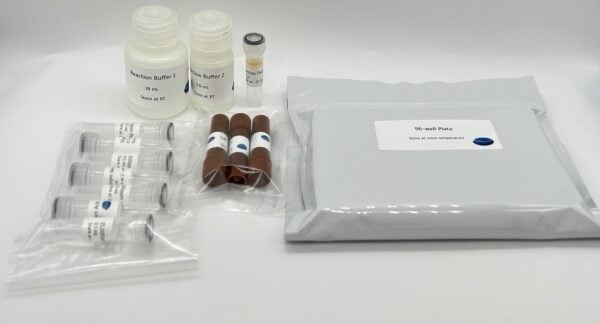
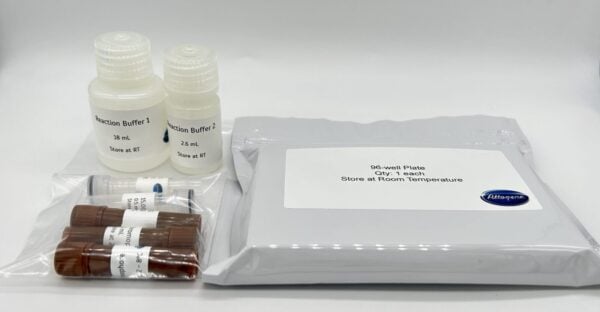
Each alkaline phosphatase assay kit includes:
- Alkaline Phosphatase Substrate: 5 mL (refrigerate)
- Alkaline Phosphatase Standard, equivalent to 50 IU/L enzyme activity: 120 µL (refrigerate)
- Alkaline Phosphatase Color Development Solution: 24 mL (refrigerate)
- 96-well plate: 1 (room temperature)
- Instruction manual
You will also need: micropipettes (5–20 µL, 20–200 µL, 200–1000 µL) with disposable tips; a timer; a microplate reader set to 590 nm; an incubator at 37 °C; purified water for dilutions and the blank; and PBS plus Triton X-100 if you are preparing cell lysates.
Who It’s For
- Cell biology and tissue engineering labs tracking ALP activity in cultured cells, for example in differentiation studies.
- Labs measuring ALP released into cell culture media.
- Research groups analyzing serum or plasma samples in non-diagnostic studies.
- Core facilities that want a quick, 96-well enzymatic activity assay with minimal hands-on time.
Sample Preparation
- Serum, plasma, culture media: assay directly after diluting with an equal volume of water. Plasma should be free of EDTA or citrate and ideally unhemolyzed.
- Cell lysates: wash cells with PBS, then lyse them in 0.5 mL of 0.2% Triton X-100 in purified water by shaking for 20 minutes at room temperature.
- Volume: prepare at least 20 µL of each sample.
- Interfering substances: EDTA, oxalate, fluoride and citrate inhibit ALP and should be avoided.
How to Use the Alkaline Phosphatase Assay Kit
Summarized from the EZ2020 instruction book:
- Pre-warm the reagents at 37 °C for 15 minutes. Set the plate reader to 590 nm, with its temperature at 37 °C if available.
- Add 50 µL of substrate to each well.
- Incubate the plate at 37 °C for 3 minutes.
- Add 5 µL of each diluted standard or diluted sample in duplicate, using water for the blank. Add standards from low to high concentration.
- Incubate at 37 °C for 10 minutes.
- Add 250 µL of color development solution to each well.
- Read absorbance at 590 nm and correct each reading against the water blank.
Download the EZ2020 Alkaline Phosphatase Assay Kit instruction book (PDF) for the full protocol.
Calculating Results
Prepare intermediate standards from the 50 IU/L standard and plot blank-corrected absorbance against ALP activity to build a standard curve. Read each sample’s activity from the curve in IU/L, then multiply by the sample’s dilution factor.
Samples above 50 IU/L should be diluted further with water and retested. Read the plate promptly and consistently, because color can continue to change after the specified reaction time. If your reader has no temperature control, use a conventional incubator; a 25 °C incubator helps keep reaction rates consistent when room temperature varies.
Related Attogene Assays
- Acetylcholinesterase Detection Kit: colorimetric AChE activity in cell, blood or tissue lysates.
- Acetylcholinesterase Inhibition Assay (Tick or Eel): plate-based screening for AChE inhibitors.
- Tyrosinase Activity Assay Kit: colorimetric tyrosinase activity measurement.
- Tyrosinase Inhibitor Assay Kit: screening for tyrosinase inhibitors.
Frequently Asked Questions
What samples work with the alkaline phosphatase assay kit?
The alkaline phosphatase assay kit accepts cell culture media, cell lysates, serum, or plasma collected without EDTA or citrate. Dilute samples with an equal volume of water before testing.
How many samples can I test?
The kit contains enough material to test 42 samples in duplicate, alongside standards in the same 96-well plate.
Which anticoagulants should I avoid?
EDTA, oxalate, fluoride and citrate inhibit ALP, so avoid them when collecting plasma or preparing samples.
What if my sample reads above the top standard?
Dilute samples above 50 IU/L further with water, rerun them, and multiply the result by the dilution factor.
Can this kit be used for diagnostic testing?
No. The alkaline phosphatase assay kit is a research tool for measuring enzyme activity in laboratory samples. It is not intended for diagnosing or monitoring any medical condition.
For research use only. Not for use in diagnostic procedures. Questions? Call 512-333-1330 or email sales@attogene.com.