

The Tyrosinase Inhibitor Assay Kit is a colorimetric tyrosinase inhibitor assay for high-throughput screening of compounds that slow the oxidation of tyrosine. Tyrosinase converts its substrate into a chromophore read at 520 nm; inhibitors reduce color formation in a concentration-dependent way. The kit contains enough reagents for 96 determinations in one 96-well plate and includes a benzoic acid inhibitor control for building a standard curve. Catalog number EZ2019-01.
Results can be qualitative or quantitative, with a stated detection range of 10–1,500 ppm benzoic acid. A single 25-minute room-temperature incubation is all the assay needs before reading.
Key Features
- Simple endpoint format: add reagents, sample and substrate, incubate 25 minutes at room temperature, then read once at 520 nm.
- Supplied inhibitor control: benzoic acid at 15,000 ppm for preparing a standard curve and confirming inhibition in every run.
- Defined measuring range: detection range of 10–1,500 ppm benzoic acid, with suggested standards at 50, 100, 200, 500 or 1,500 ppm.
- Methanol-compatible: test compounds are diluted in 100% methanol, or another solvent with a matching solvent control.
- Plate-based throughput: 96 determinations per kit, with samples run in duplicate or triplicate on a standard microplate reader.
- Master-mix option: the manual gives a master-mix recipe to speed up pipetting across many wells.
What’s in the Kit
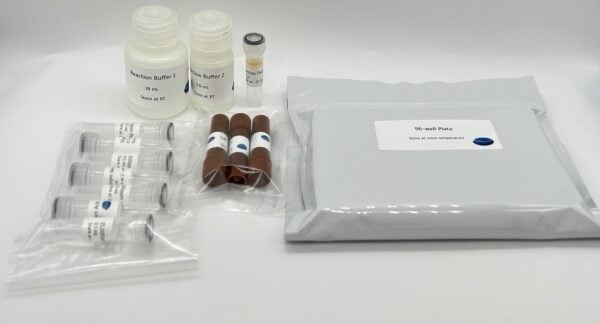
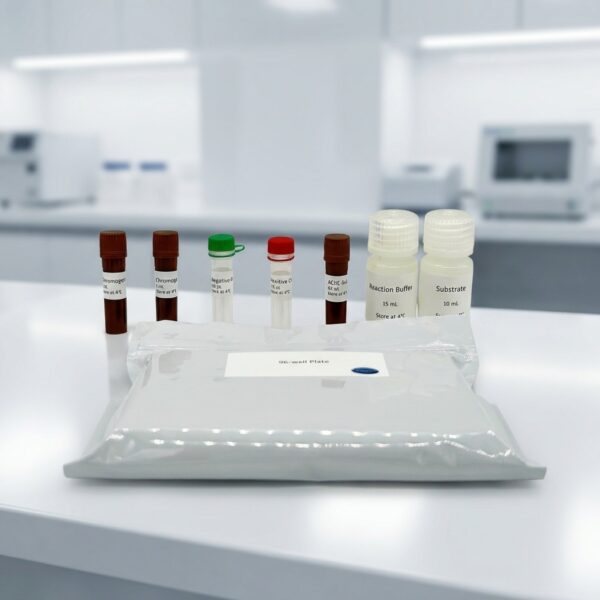
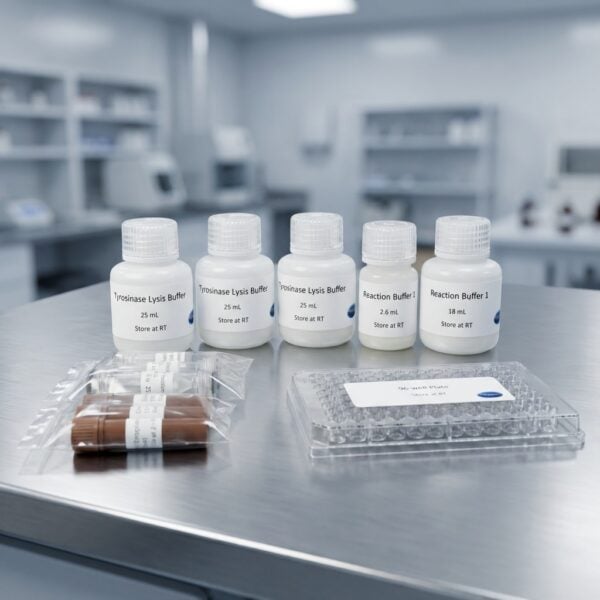
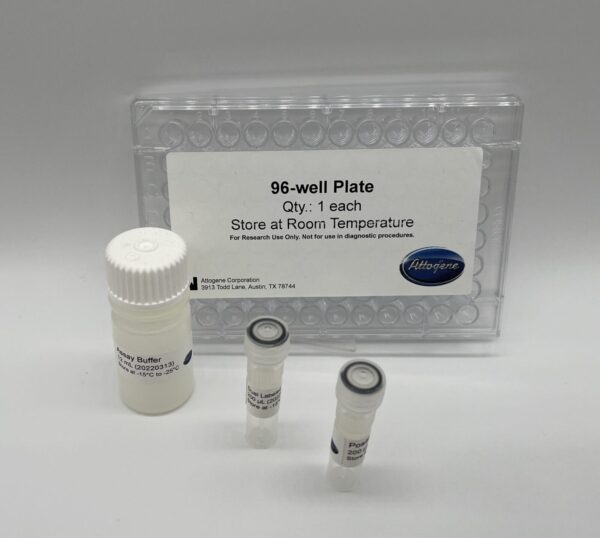
Each tyrosinase inhibitor assay kit includes:
- Reaction Facilitator (tyrosinase): 200 µL (store at -15 to -25 °C)
- Chromophore: 1.5 mL x 2 (2–8 °C)
- Reaction Buffer 1: 18 mL (room temperature)
- Reaction Buffer 2: 2.6 mL (room temperature)
- Substrate (S): 700 µL (2–8 °C)
- Inhibitor Control, benzoic acid 15,000 ppm: 0.5 mL (2–8 °C)
- 96-well plate: 1 (room temperature)
You will also need: a microplate reader (520 nm), a vortex mixer, pipettes (10 µL, 20 µL, 100 µL, 1000 µL), and pure HPLC-grade methanol (100%).
Who It’s For
Tyrosinase, also called polyphenol oxidase, is an oxidoreductase that takes part in the biosynthesis of melanin, the pigment found in hair, eyes and skin. It also drives enzymatic browning in harvested fruit and vegetables. That makes it a long-standing research target for:
- Cosmetic and personal-care development teams screening candidate skin-brightening ingredients.
- Natural-product and botanical extract labs looking for new tyrosinase inhibitors.
- Food science and agricultural researchers studying anti-browning treatments.
- Academic enzymology groups comparing inhibitor potency in a plate format.
How to Use the Tyrosinase Inhibitor Assay
Summarized from the EZ2019-01 manual. Use a new pipette tip for each step and each well, and add reagents in this order:
- Prepare the top standard by adding 100 µL of Inhibitor Control (15,000 ppm benzoic acid) to 900 µL of 100% methanol to make 1,500 ppm, then dilute further as needed.
- Dilute test compounds in 100% methanol, or your chosen solvent.
- Add 167 µL Reaction Buffer 1, 31 µL Chromophore, 2 µL Reaction Facilitator, then 25 µL Reaction Buffer 2 to each well, or use a master mix of these reagents.
- Add 40 µL of sample or standard. Use 40 µL of 100% methanol for the enzyme control.
- Add 7 µL of Substrate (S) and mix by pipetting up and down 3–4 times.
- Incubate at room temperature for 25 minutes.
- Read absorbance at 520 nm.
Download the Tyrosinase Inhibitor Assay Kit manual (PDF) for the master-mix recipe and full protocol.
Reading and Calculating Results
The higher the inhibitor concentration, the less color is produced. For each well, calculate relative absorbance as the sample (or standard) absorbance divided by the zero-standard absorbance, multiplied by 100.
Plot the mean relative absorbance of each benzoic acid standard against its concentration in ppm to build the standard curve, then read sample values from it. Lower relative absorbance indicates stronger inhibition.
Solvent tips: keep methanol below 15% by volume in the reaction. If you use a different solvent, or exceed that level, include a solvent control with 40 µL of the same solvent.
Related Attogene Assays
- Tyrosinase Activity Assay Kit: measures tyrosinase activity rather than inhibition.
- Acetylcholinesterase Inhibition Assay (Tick or Eel): a plate-based screen for AChE inhibitors.
- Alkaline Phosphatase Assay Kit: colorimetric ALP activity in cell culture samples.
- Acetylcholinesterase Detection Kit: AChE activity in cell, blood or tissue lysates.
Frequently Asked Questions
What inhibitor control does the kit use?
The tyrosinase inhibitor assay kit supplies benzoic acid at 15,000 ppm as its inhibitor control. It is diluted in methanol to prepare the standard curve.
How many samples can I run?
The kit provides reagents for 96 determinations. Running test compounds in duplicate or triplicate, plus standards and controls, determines how many unique samples fit on the plate.
Can I dissolve test compounds in DMSO or another solvent?
The manual is written for 100% methanol but allows another solvent if you include a solvent control containing 40 µL of that solvent. Solvent effects other than methanol are not characterized in the manual, so validate your solvent first.
Is the tyrosinase inhibitor assay qualitative or quantitative?
Both. You can compare samples against the enzyme control for a yes or no answer, or use the benzoic acid standard curve for quantitative comparisons across the 10–1,500 ppm range.
How should I store the kit?
Store the Reaction Facilitator at -15 to -25 °C; the Chromophore, Substrate and Inhibitor Control at 2–8 °C; and the buffers and plate at room temperature.
For research use only. Not for use in diagnostic procedures. Questions? Call 512-333-1330 or email sales@attogene.com.