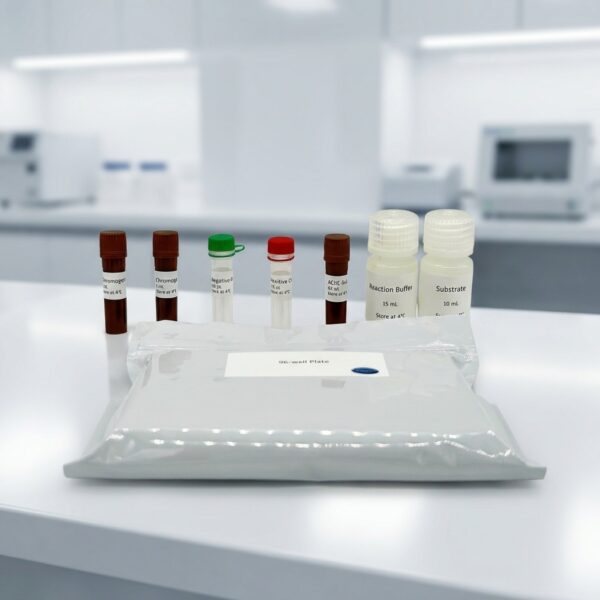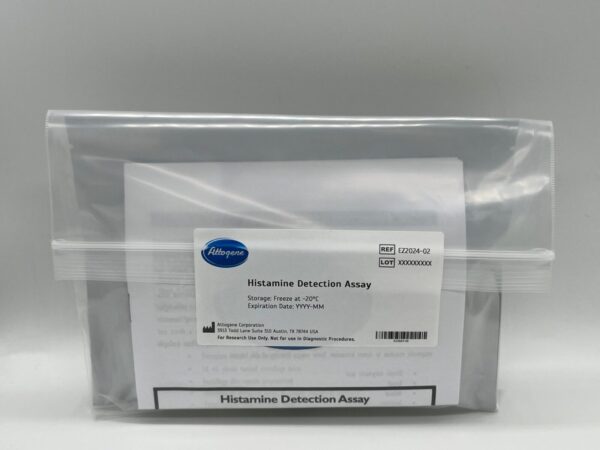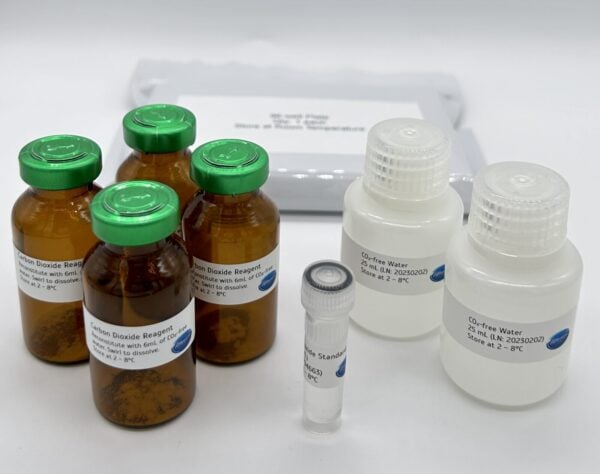


The Attogene Tyrosinase Activity Assay Kit (catalog EZ2017) is a simple one-step, plate-based colorimetric tyrosinase activity assay for measuring tyrosinase activity in biological samples such as cell and tissue lysates. It detects as little as 0.30 U of tyrosinase, uses only 2 µL of sample per well, and is read at 520 nm after a 25-minute incubation at room temperature. Each kit provides 96 determinations.
Tyrosinase converts the kit’s phenolic substrate to a quinone intermediate, which reacts with an enhancer to form a highly stable chromophore. A tyrosinase positive control and a lysis buffer are included.
Key Features
- Sensitive: detects as low as 0.30 U tyrosinase in a sample.
- One-step format: add reagents, sample and substrate, incubate 25 minutes, read.
- Stable chromophore: endpoint absorbance measured at 520 nm.
- Positive control included: tyrosinase at 166, 16.6, 1.66, 0.166 U/µL for standards and spiked controls.
- Sample prep covered: 50 mL of Tyrosinase Lysis Buffer for cells and tissue.
- Reproducible: master mix option for consistent pipetting across the plate.
What’s in the Kit
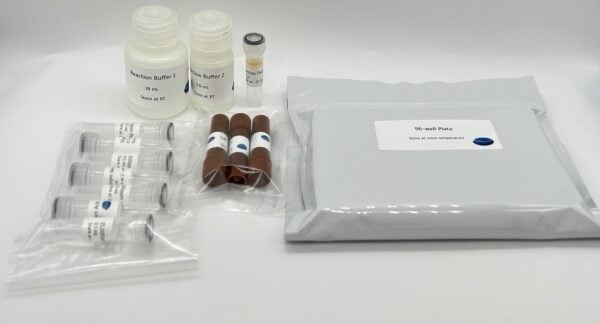
Each tyrosinase activity assay kit includes:
- Tyrosinase Positive Control (166, 16.6, 1.66, 0.166 U/µL), 50 µL, -15 to -25 °C
- Chromophore, 2 x 1.5 mL, 2 to 8 °C
- Reaction Buffer 1, 18 mL, room temperature
- Reaction Buffer 2, 2.6 mL, room temperature
- Substrate (S), 700 µL, 2 to 8 °C
- Tyrosinase Lysis Buffer, 50 mL, room temperature
- 96-well plate, 1
You will also need: a microplate reader at 520 nm, a vortex mixer, and pipettes covering 10 µL to 1000 µL. For sample preparation, a homogenizer, a refrigerated centrifuge (10,000 x g at 4 °C) and a protein assay.
Who It’s For
- Cosmetic and skin-care R&D teams studying pigmentation and evaluating ingredients that affect tyrosinase.
- Food and agricultural scientists investigating enzymatic browning in fruit, vegetables and mushrooms.
- Cell biology labs measuring tyrosinase activity in cultured cells or tissue.
- Screening groups pairing activity measurements with inhibitor studies.
Preparing Samples
- Homogenize 8 million cells or 50 mg of tissue in 500 µL of ice-cold Tyrosinase Lysis Buffer.
- Keep on ice for 10 minutes, then centrifuge at 10,000 x g for 15 minutes at 4 °C.
- Collect the supernatant and measure protein; adjust to 1 to 2.5 µg/µL.
- Use lysates immediately or store them at -80 °C. Set up a sample background control well for each sample.
How to Run the Tyrosinase Activity Assay
- Add 167 µL of Reaction Buffer 1 and 31 µL of Chromophore to each well.
- Add 2 µL of sample, lysis buffer (blank) or Tyrosinase Positive Control.
- Add 25 µL of Reaction Buffer 2, then 7 µL of Substrate.
- Mix by pipetting up and down 3 to 4 times, using a new tip for each well.
- Incubate at room temperature for 25 minutes and read absorbance at 520 nm.
Master mix option: combine Reaction Buffer 1, Chromophore and Reaction Buffer 2 with a 10% overage, dispense 223 µL per well, then add 2 µL of sample and 7 µL of Substrate. Full instructions are in the Tyrosinase Activity Assay Kit manual (PDF).
To calculate results, run the positive control standards in duplicate with each sample set, plot mean relative absorbance against tyrosinase units on a log scale, and read sample activity from the curve.
About Tyrosinase
Tyrosinase (EC 1.14.18.1) is a copper-containing enzyme found in organisms from bacteria and fungi to mammals. It catalyzes two sequential steps in melanin synthesis: hydroxylation of a monophenol, then oxidation of an ortho-diphenol to a quinone, which goes on to polymerize into melanin. It is responsible for the browning of cut fruit, vegetables and mushrooms, and is a key enzyme in skin pigmentation research.
Frequently Asked Questions
What is the detection limit of the tyrosinase activity assay?
The kit can detect as low as 0.30 U of tyrosinase in a sample.
Which samples can I test?
Biological samples such as cell and tissue lysates prepared in the supplied lysis buffer, at 1 to 2.5 µg/µL protein.
How long does the assay take?
After sample preparation, the plate is set up in minutes and incubated for 25 minutes at room temperature before reading at 520 nm.
Can I use it to screen tyrosinase inhibitors?
The tyrosinase activity assay measures enzyme activity. For dedicated inhibitor screening, see our Tyrosinase Inhibitor Assay Kit.
Do you offer other colorimetric kits in this format?
Yes. The Benzoic Acid Detection Kit and the Carbon Dioxide Detection Kit also run in 96-well plates.
For research use only. Not for use in diagnostic procedures. Questions? Call 512-333-1330 or email sales@attogene.com.