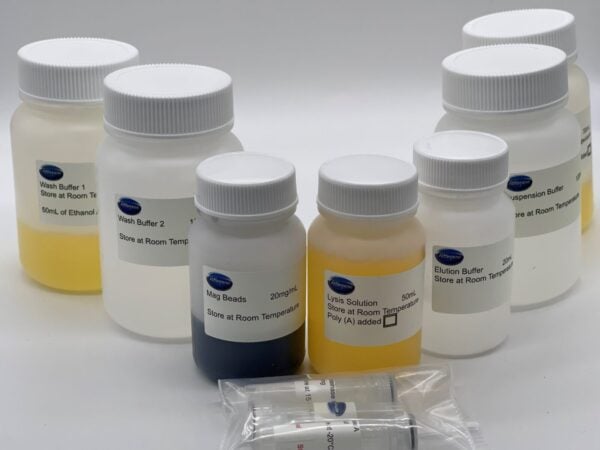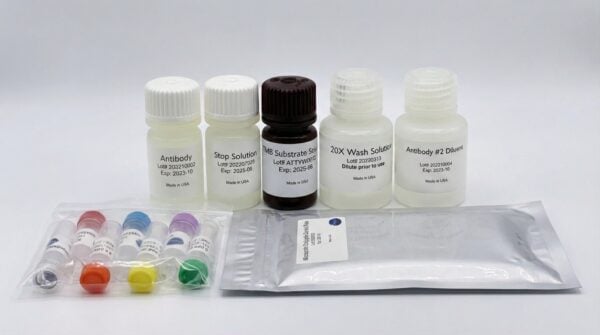


The Attogene Benzoic Acid Detection Kit (catalog EZ2013) is an enzymatic, colorimetric benzoic acid detection kit for screening the preservative benzoic acid (E 210) in milk, shrimp, animal feed and beverages. It comes as a 100-tube milk kit read against a color card, or as 96-well plate kits for shrimp, feed and white wine with standards from 0 to 1,500 ppm for quantitative reading.
Benzoic acid slows the rate at which the kit’s chromophore develops, so the more benzoic acid in the sample, the less color forms.
Key Features
- Four sample formats: milk (EZ2013-01), shrimp (EZ2013-02), feed (EZ2013-03) and beverages such as white wine (EZ2013-04).
- Visual or quantitative: the milk kit forms a pink color matched to a color card; plate kits are read at 520 nm against a standard curve.
- Fast tube test: 50 µL of milk and a 5 to 10 minute incubation at room temperature.
- Standards included: plate kits contain six standards (0, 50, 100, 200, 500, 1,500 ppm) plus a 15,000 ppm spike solution.
What’s in the Kit
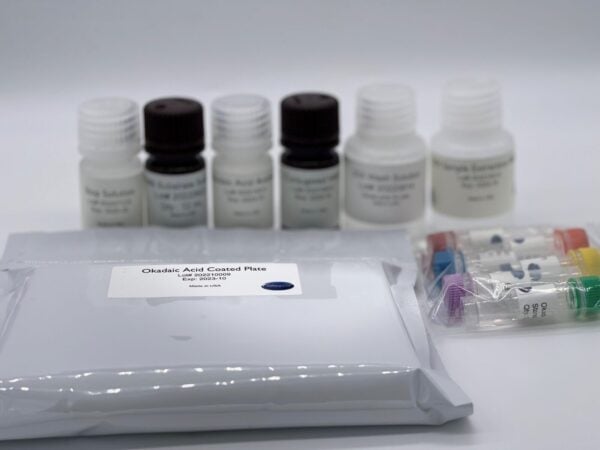
Each benzoic acid detection kit includes the reagents for its sample format.
Milk tube kit (EZ2013-01):
- Reaction Facilitator, 300 µL (2 to 8 °C)
- Chromophore, 2 x 1.5 mL (2 to 8 °C)
- Substrate (S), 700 µL (2 to 8 °C)
- Benzoic acid solution, 0.15% (1,500 ppm), 50 µL
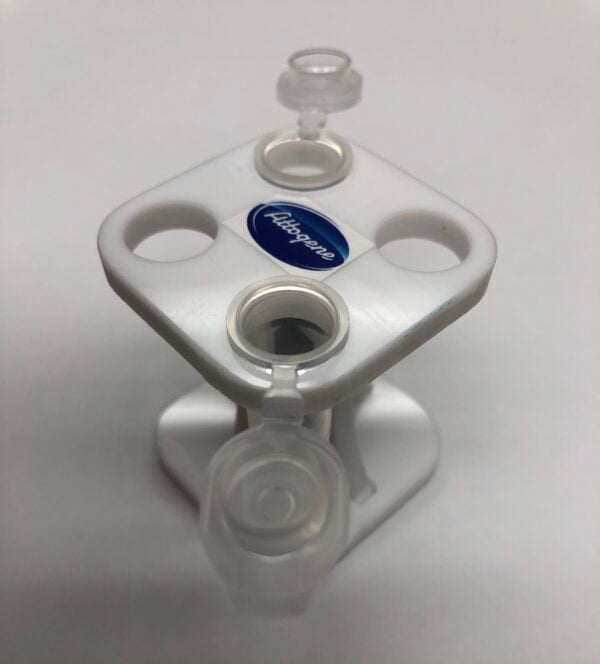
- 1.5 mL tubes, 100 each, and a color card for milk samples
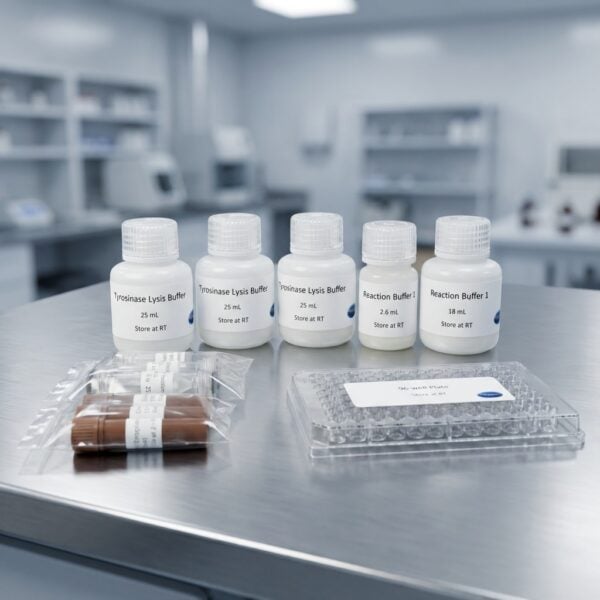
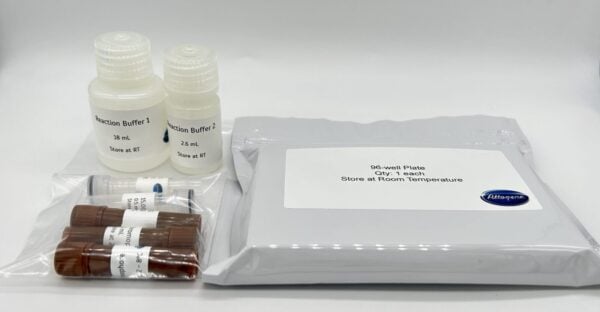
Plate kits for shrimp, feed and beverages (96 determinations):
- Reaction Facilitator, 200 µL (-15 to -25 °C)
- Chromophore, 2 x 1.5 mL, and Substrate (S), 700 µL (2 to 8 °C)
- Reaction Buffer 1, 18 mL, and Reaction Buffer 2, 2.6 mL (room temperature)
- Benzoic acid standards, 6 x 0.5 mL, and spike solution, 0.5 mL
- One 96-well plate; the feed kit also includes 3 mL of Stop Solution
You will also need: pipettes covering 10 µL to 1000 µL. Plate kits also need a microplate reader with a 520 nm filter, a vortex mixer, a tissue homogenizer, a centrifuge and 100% methanol. Quantitative reading of the milk kit uses a Nix sensor or a reader at 510 nm.
Who It’s For
- Dairy and seafood QC labs screening milk and shrimp for added benzoic acid.
- Feed manufacturers and testing labs verifying benzoic acid in feed.
- Wine and beverage producers monitoring white wine and other alcoholic beverages.
How to Use the Benzoic Acid Detection Kit
Milk tube format:
- Pipette 50 µL of room-temperature sample into a 1.5 mL tube.
- Add 7 µL of Substrate, 3 µL of Reaction Facilitator and 30 µL of Chromophore, using a new tip for each step.
- Mix by pipetting 3 to 4 times and incubate at room temperature for 5 to 10 minutes.
- Compare the tube with the color card, or transfer to a 96-well plate and read at 510 nm.
Shrimp and beverage plate format:
- Shrimp: homogenize, mix 1 g with 2 mL of 100% methanol, vortex 1 minute and centrifuge at 3000 x g for 20 minutes (dilution factor 3). Beverages are added directly; strongly colored drinks such as red wine may need decoloring.
- To each well add 167 µL Reaction Buffer 1, 31 µL Chromophore, 2 µL Reaction Facilitator and 25 µL Reaction Buffer 2.
- Add 40 µL of sample or standard, then 7 µL of Substrate, and mix.
- Incubate at room temperature for 25 minutes and read absorbance at 520 nm.
Feed format: 1 g of feed is extracted in 11 mL of methanol, then a 1 mL portion is centrifuged at 12,000 x g for 2 minutes (dilution factor 12). The feed protocol has its own reagent order and ends with the Stop Solution.
Full protocols are in the milk spec sheet and the shrimp, feed and beverage manuals linked below this description.
Reading Results
- Less color means more benzoic acid. The milk color card scale runs 10, 20, 40, 60, 80, 100, 150 ppm.
- Standard curve: for plate kits, express each well as a percentage of the zero standard, plot the standards, read samples from the curve and apply the dilution factor.
- Consistency: read on time, since color keeps changing; a 25 °C incubator steadies the rate. Run standards with every sample set.
Why Test for Benzoic Acid
Benzoic acid is a widely used preservative that also occurs naturally, for example in cranberries. It must be declared on food labels, permitted levels vary by product and jurisdiction, and benzene can form from it in soft drinks that also contain ascorbic acid.
Frequently Asked Questions
Which version of the benzoic acid detection kit should I order?
Select your sample type when ordering: milk, shrimp, feed or white wine. Each version has its own protocol and sample preparation.
What is the detection limit of the plate kits?
The manuals give a sample detection limit of 50 ppm and a quantification limit of 100 ppm, each multiplied by the dilution factor. Samples above the top standard can be diluted and re-tested.
Can I test other sample types?
Yes, with a negative control and spiked positive samples in the same matrix as the color reference.
Do I need an instrument?
Not for the milk kit, which is read by eye. The plate kits are designed for a microplate reader.
How should a high result be confirmed?
If the benzoic acid detection kit shows higher than expected levels, confirm with an analytical method. For related screening, see our Formaldehyde Detection Kit, the Pesticide Detection Strip Test, the Carbon Dioxide Detection Kit and the Tyrosinase Activity Assay Kit.
For research use only. Not for use in diagnostic procedures. Questions? Call 512-333-1330 or email sales@attogene.com.