
The Pentachlorophenol ELISA Kit (EL2051-01) is a competitive enzyme immunoassay for quantitative and qualitative analysis of pentachlorophenol (PCP) residue in honey, milk, juice and rice. The 96-well kit includes six standards spanning a 10 to 250 ppb curve, has an overall sensitivity of 10 ppb, and completes in about 1.5 hours per run, with results read at 450 nm.
Pentachlorophenol is an organochlorine compound that has been used as an insecticide, antibacterial agent, fungicide, algaecide and preservative, often in combination with other pesticides. It can accumulate in animals and enter the human body through the food chain, and it is classified as a probable human carcinogen with harmful effects on the liver, kidneys, nervous system and other organs. Compared with instrumental analysis, an ELISA reduces hands-on work and operator error while still giving quantitative data.
Key Features
- Food matrices: intended for PCP residue in honey, milk, juice and rice.
- Quantitative or qualitative: read concentrations from a standard curve or use the kit as a screen.
- Six calibrators: 0, 10, 30, 60, 100 and 250 ppb.
- Sensitivity and precision: overall sensitivity of 10 ppb; kit CV below 10%.
- About 1.5 hours: two 30-minute incubations and a 15-minute substrate step at room temperature.
- Storage: 2–8 °C, protected from light; 12 months or until the expiration date.
What’s in the Kit
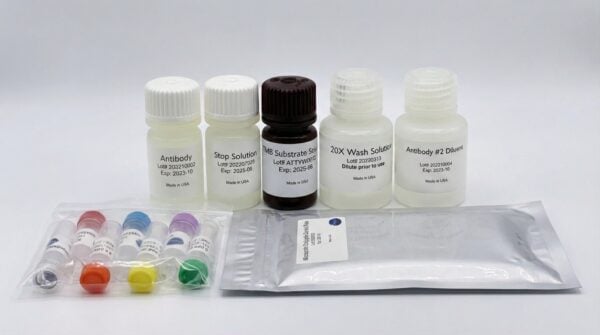
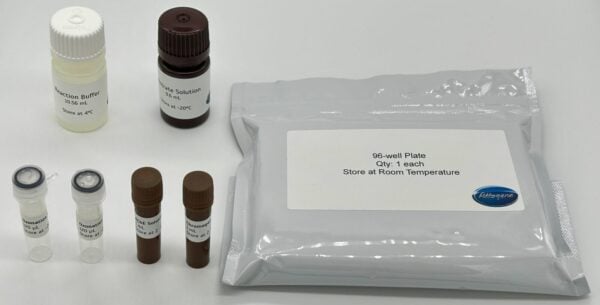
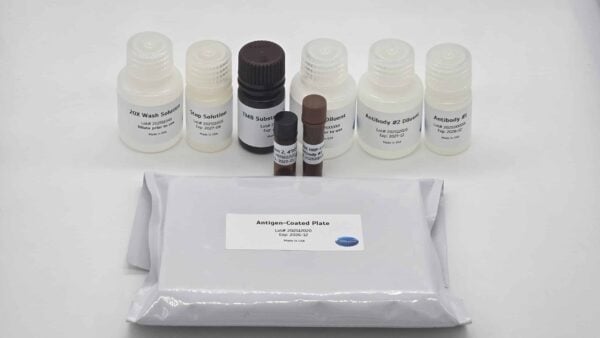
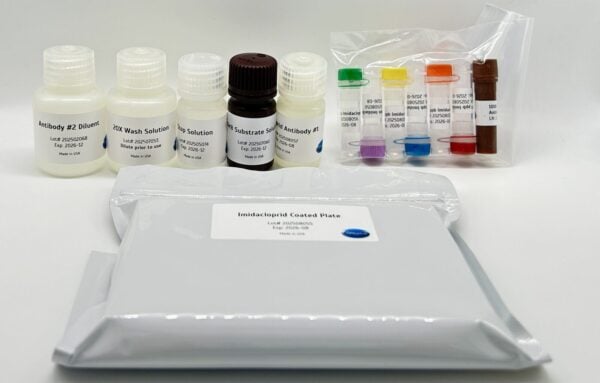
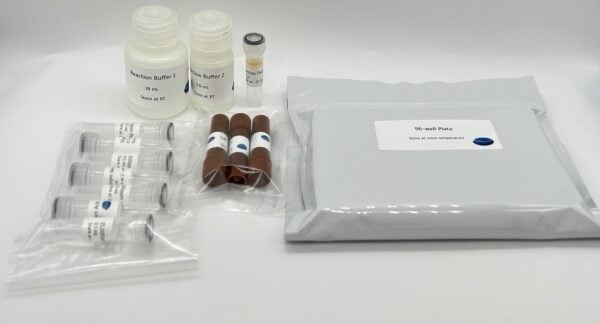
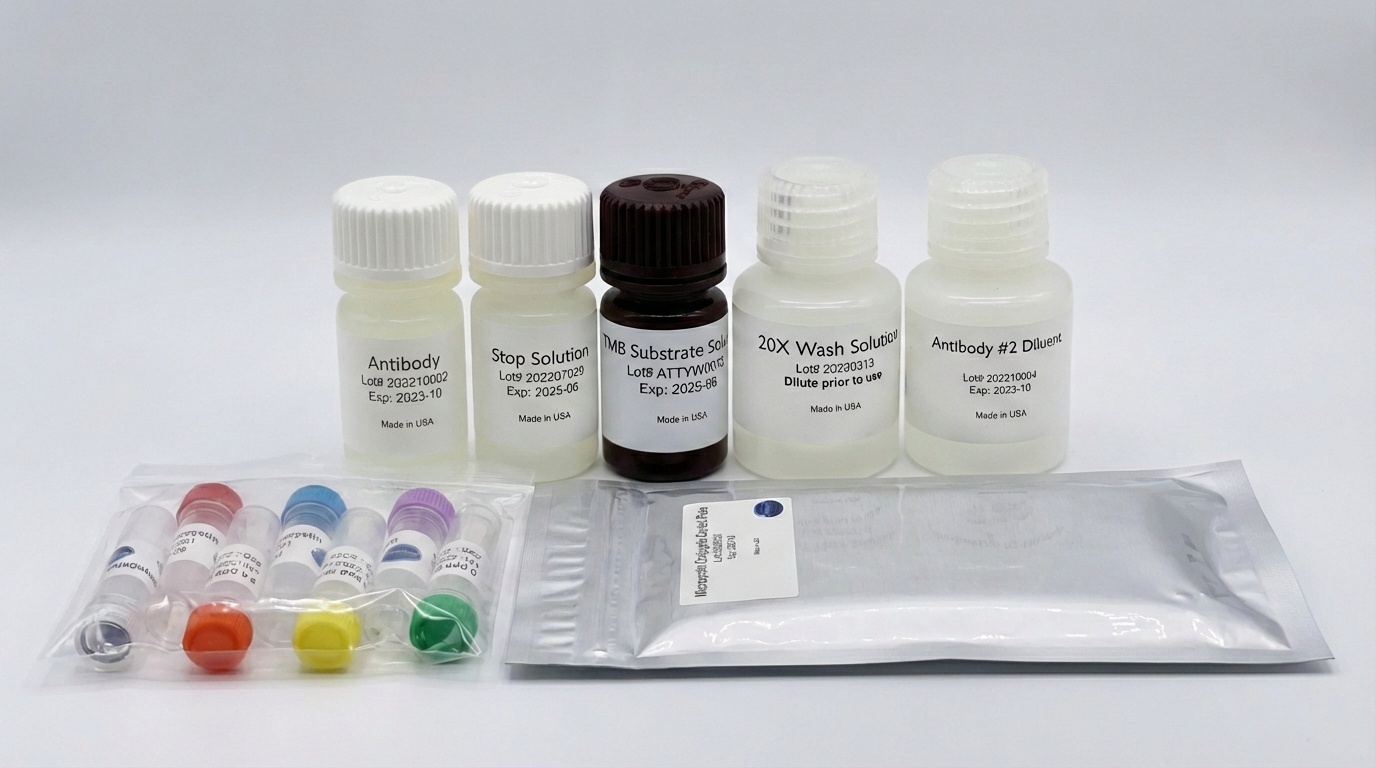
Each pentachlorophenol ELISA kit includes:
- Microtiter plate with 96 wells coated with pentachlorophenol
- Pentachlorophenol standards, 6 vials × 0.8 mL (0, 10, 30, 60, 100 and 250 ppb)
- Pentachlorophenol Antibody#1, 11 mL
- 100X HRP-conjugated Antibody#2, 0.25 mL
- Antibody#2 Diluent, 20 mL
- 20X Wash Solution, 28 mL
- TMB Substrate Solution, 12 mL
- Stop Solution, 14 mL
You will also need: an ELISA plate reader (450 nm/630 nm), vortex mixer, timer, wash bottle, analytical balance, 50 mL and 2 mL polystyrene centrifuge tubes, micropipettes (20–200 µL and 100–1000 µL), a 300 µL multipipette, and deionized water.
Who It’s For
- Food safety research laboratories testing honey, dairy, juice and grain
- Agricultural and residue monitoring programs in a research setting
- Academic groups studying organochlorine contaminants in the food chain
- Labs that want a lower-cost screen before instrumental confirmation
How to Use the Pentachlorophenol ELISA Kit
- Bring all reagents and microwells to room temperature (20–25 °C) for at least 30 minutes. Prepare 1X Wash Solution (1 part 20X concentrate to 19 parts deionized water) and fresh 1X HRP-conjugated Antibody#2 (1 part to 99 parts Antibody#2 Diluent).
- Number the well positions and run all standards and samples in duplicate. Return unused wells to the zip-lock bag at 2–8 °C.
- Add 50 µL of standard or sample to each well, then 100 µL of Antibody#1. Shake gently for 30 seconds, cover and incubate 30 minutes at room temperature.
- Decant, wash three times with 250 µL of 1X Wash Solution and tap dry on absorbent paper.
- Add 150 µL of 1X HRP-conjugated Antibody#2, shake, cover and incubate 30 minutes at room temperature. Wash three times as before.
- Add 100 µL of TMB Substrate Solution and incubate 15 minutes at 25 °C, covered.
- Add 100 µL of Stop Solution, mix gently and read at 450 nm within 5 minutes.
Download the Pentachlorophenol ELISA Kit Manual (EL2051-01) for the full protocol and precautions.
How It Works and Reading Results
PCP in the sample and PCP antigen compete for binding to Antibody#1, which is captured on the well walls. An HRP-conjugated secondary antibody and TMB substrate then produce a blue color that is weaker when more PCP is present.
Express each standard and sample as a percentage of the zero standard (B/B0 × 100%), plot against the log of standard concentration, and read sample concentrations from the curve, multiplying by any dilution factor. If a sample’s absorbance is below the 250 ppb calibrator, dilute it into the 10–250 ppb range and rerun.
Frequently Asked Questions
What samples can the pentachlorophenol ELISA kit test?
The manual lists honey, milk, juice and rice. Contact us for sample preparation guidance for your matrix.
What is the sensitivity?
The manual lists an overall sensitivity of 10 ppb, with a standard curve from 10 to 250 ppb.
How long does one run take?
About 1.5 hours, including two 30-minute incubations and a 15-minute substrate step.
How should I store the kit?
At 2–8 °C, away from light; do not freeze. Treated samples can be kept at 2–8 °C in the dark for 24 hours.
How do I check that the reagents are working?
The TMB substrate should be clear before use, and the zero standard should read at least 0.5 at 450 nm. Lower values suggest a reagent has degraded.
Related ELISA Kits
For other residues in food and agricultural samples, see the Carbendazim ELISA Kit, which covers the same honey, milk, juice and rice matrices, and the Organophosphorus ELISA Kit.
For research use only. Not for use in diagnostic procedures. Questions? Call 512-333-1330 or email sales@attogene.com.