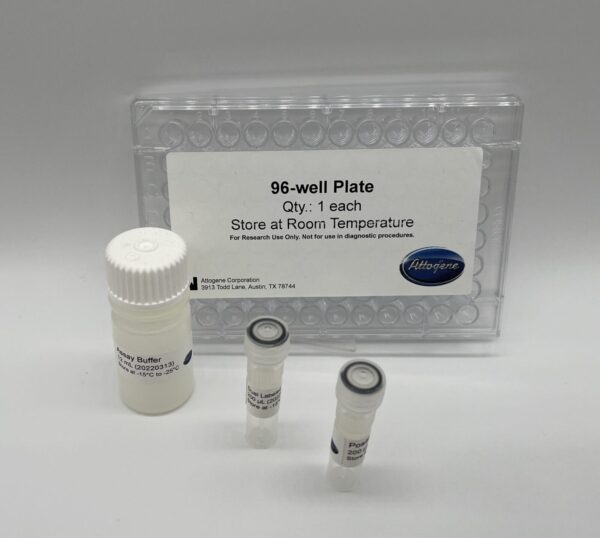

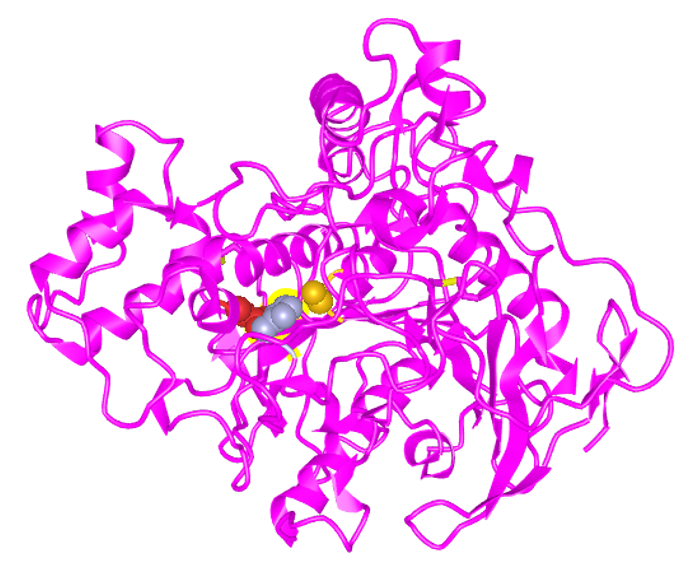



The Total Organophosphate Residue Detection Kit (Tick-Derived AChE), catalog EZ2015-01, is a cattle tick acetylcholinesterase kit that screens extracted liquid or solid samples for organophosphate and carbamate (OPaC) pesticides. Instead of a vertebrate enzyme, it uses BmAChE1, a recombinantly expressed acetylcholinesterase from the cattle tick Rhipicephalus (Boophilus) microplus. The assay runs in a 96-well plate with an oxonation pre-treatment and a 10-minute kinetic read at 412 nm.
Ticks are a major target of organophosphate acaricides, and the manual describes BmAChE1 as more sensitive to OPaCs and more stable than vertebrate AChEs, which makes it well suited as a biosensor reagent.
Key Features
- Recombinant tick enzyme: BmAChE1 from R. microplus, supplied as a ready-to-use solution.
- Total-residue screen: responds to any OP or carbamate that inhibits the enzyme, not to a single compound.
- Oxon conversion built in: Oxonation Reagents 1 and II turn thiophosphate pesticides into their active oxon forms.
- Listed sensitivities: chlorpyrifos 1 ppm; malathion 4 ppm; phorate 4 ppm; diazinon 7 ppm.
- Controls in the box: OP Pesticide Mix A standards and a negative control.
- 96 determinations per kit.
What’s in the Kit
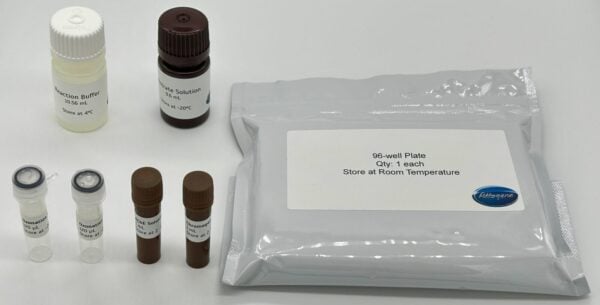
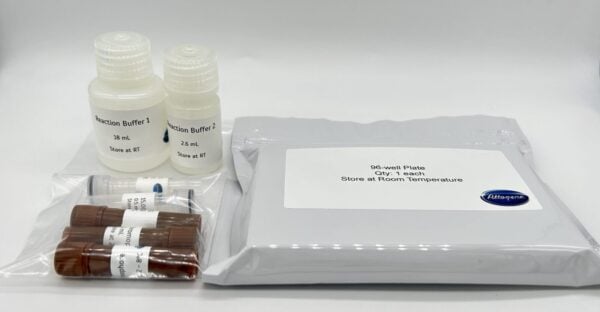
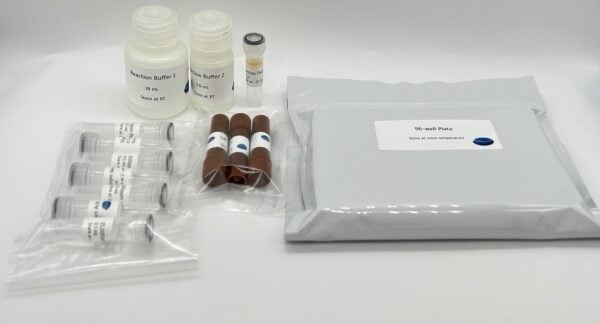
Each cattle tick acetylcholinesterase kit includes:
- AChE Solution (cattle tick), 200 µL, 2 to 8 °C
- Chromogen Solution, 2 x 1 mL, 2 to 8 °C
- Reaction Buffer, 10.56 mL, 2 to 8 °C
- Substrate Solution (acetylthiocholine), 5 x 1 mL, frozen (-15 to -25 °C)
- Oxonation Reagent 1 and Oxonation Reagent II, 4 x 120 µL each, frozen
- OP Pesticide Mix A standards, 6 x 0.8 mL, frozen
- Negative Control, 100 µL, frozen
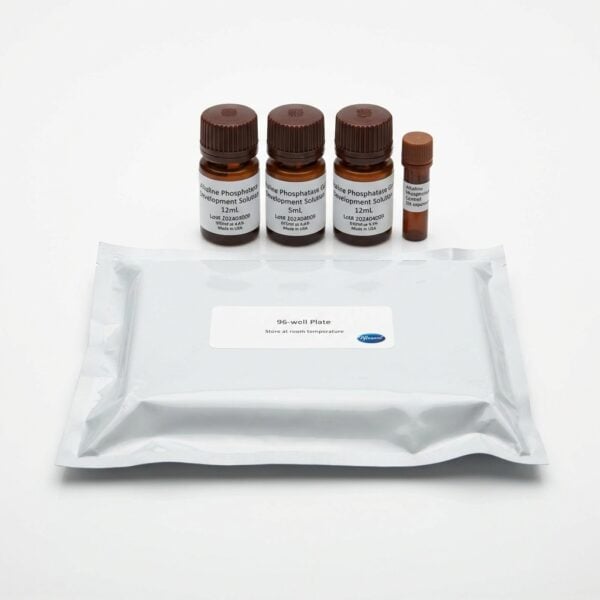
- One 96-well microplate (store at 15 to 35 °C)
You will also need: a microplate reader at 412 nm, a timer, micropipettes with tips covering 5 to 200 µL, and methanol if you dilute samples.
Who It’s For
- Pesticide residue labs wanting a more OP-sensitive enzyme for screening food, feed or water extracts.
- Veterinary and livestock researchers studying organophosphate acaricides used against cattle ticks.
- Biosensor developers evaluating tick AChE as a recognition element.
- Method developers comparing tick and eel enzymes side by side.
How to Use the Cattle Tick Acetylcholinesterase Kit
- Warm the refrigerated reagents to room temperature for 60 minutes. Thaw the substrate and both Oxonation Reagents at room temperature, then refreeze them right after the run.
- Bring samples into a 10 to 50% methanol matrix; other matrices should be validated. Attogene support can provide extraction methods.
- Pipette 50 µL of each sample or standard into the plate, in duplicate or triplicate.
- Add 5 µL of Oxonation Reagent 1, mix and wait 10 minutes; add 5 µL of Oxonation Reagent II, mix and wait 5 minutes.
- Add 2 µL of tick AChE Solution, then 100 µL of Reaction Buffer and 20 µL of Chromogen, mixing after each addition.
- Start the reaction with 100 µL of Substrate Solution and follow the rise in absorbance at 412 nm for 10 minutes.
Full details are in the EZ2015-01 Organophosphate/Carbamate Detection Assay manual (PDF). A 25 °C incubator helps keep reaction rates consistent.
Why a Tick Enzyme?
Acetylcholinesterase breaks down acetylcholine at nerve synapses. Organophosphates and carbamates bind its active-site serine, which is how they act as insecticides and acaricides and why they are a concern for people exposed to them. AChE inhibition assays use the same chemistry in a well: less enzyme activity means more inhibitor.
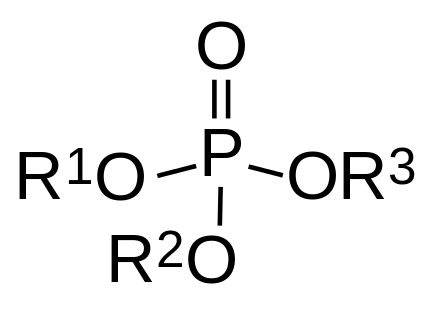
Most OP pesticides are applied as thiophosphates (P=S) that inhibit AChE weakly until oxidized to oxons (P=O), so the kit includes an oxonation step. In the manual, an inhibition comparison with chlorpyrifos shows the tick enzyme alongside electric eel AChE.
Reading the Results
- Positive screen: activity 20% or more below the negative control suggests OP or carbamate residue above the detection limit.
- Matrix check: run a negative control prepared in the same matrix, especially for pigmented samples.
- Quantitation: only valid against the standard curve when one known compound is present.
- Out of range: dilute stepwise in 10% methanol and correct for dilution.
- Confirmation: identify residues by HPLC or mass spectrometry.
Frequently Asked Questions
What makes the cattle tick acetylcholinesterase kit different from the eel kit?
The enzyme. This kit uses recombinant tick BmAChE1, while the electric eel AChE kit uses a vertebrate enzyme. Reagents and workflow are otherwise the same.
Does the kit detect carbamates as well as organophosphates?
Yes. Both classes inhibit AChE, so both reduce the signal in the cattle tick acetylcholinesterase kit. The manual lists limits for four OPs only.
What samples can I use?
The cattle tick acetylcholinesterase kit accepts liquids, or solids extracted to recover the pesticide, in 10 to 50% methanol. Validate other matrices with a matrix-matched negative control.
Is there a simpler screening option?
For strip-based screening see the Pesticide Detection Strip Test. For immunoassay testing see the Organophosphorus ELISA Kit, and to profile inhibitors with tick or eel enzyme see the Acetylcholinesterase Inhibition Assay.
For research use only. Not for use in diagnostic procedures. Questions? Call 512-333-1330 or email sales@attogene.com.