


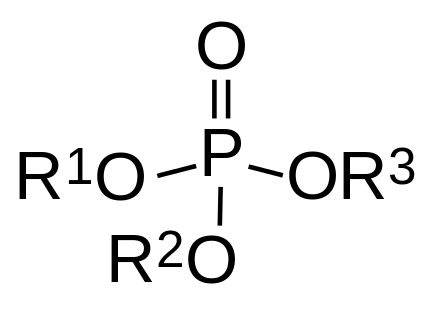


The Acetylcholinesterase (Electric Eel) Total Organophosphate Residue Detection Kit (catalog EZ2015) is an enzyme-inhibition organophosphate residue detection kit that screens liquid samples, and extracts of solid samples, for organophosphate and carbamate (OPaC) pesticides. It uses a stable electric eel acetylcholinesterase (AChE) formulation, a built-in oxonation step, and a 10-minute kinetic read at 412 nm in a 96-well plate. Listed sensitivities are 1 ppm for chlorpyrifos, 4 ppm for malathion and phorate, and 7 ppm for diazinon.
Because the test responds to AChE inhibition rather than to one molecule, a single run gives a total-residue screen across many OP and carbamate compounds.
Key Features
- Broad screen: detects AChE-inhibiting organophosphates and carbamates in one assay.
- Oxonation step included: two Oxonation Reagents convert thiophosphate (P=S) pesticides to their more inhibitory oxon (P=O) forms before the enzyme step.
- Stable enzyme: ready-to-use electric eel AChE solution stored at 2 to 8 °C.
- Standards and control supplied: six vials of OP Pesticide Mix A plus a negative control.
- Fast: 15 minutes of oxonation, then a 10-minute kinetic read.
- Plate format: 96 determinations in a microplate.
What’s in the Kit
Each organophosphate residue detection kit includes:
- Chromogen Solution, 2 x 1 mL (2 to 8 °C)
- AChE Solution (electric eel), 200 µL (2 to 8 °C)
- Reaction Buffer, 10.56 mL (2 to 8 °C)
- Substrate Solution (acetylthiocholine), 5 x 1 mL (-15 to -25 °C)
- Oxonation Reagent 1, 4 x 120 µL (-15 to -25 °C)
- Oxonation Reagent II, 4 x 120 µL (-15 to -25 °C)
- OP Pesticide Mix A standards, 6 x 0.8 mL (-15 to -25 °C)
- Negative Control, 100 µL (-15 to -25 °C)
- 96-well microplate, 1
You will also need: micropipettes with tips for 5 to 20 µL and 20 to 200 µL, a timer, a microplate reader at 412 nm, and methanol (optional) for sample dilution.
Who It’s For
- Food safety labs screening produce and food extracts for pesticide residues.
- Environmental and water labs checking samples for OP and carbamate contamination.
- Agricultural researchers monitoring pesticide use and carry-over.
- Labs comparing enzyme sources alongside our tick-derived AChE kit.
How to Use the Organophosphate Residue Detection Kit
- Let the reagents reach room temperature (about 60 minutes). Thaw the Oxonation Reagents and substrate at room temperature and return them to the freezer after use.
- Prepare samples in a 10 to 50% methanol matrix. For solid samples, contact Attogene for extraction instructions.
- Add 50 µL of sample or standard per well, in duplicate or triplicate.
- Add 5 µL of Oxonation Reagent 1, mix and incubate 10 minutes at room temperature.
- Add 5 µL of Oxonation Reagent II, mix and incubate 5 minutes at room temperature.
- Add 2 µL of AChE Solution, 100 µL of Reaction Buffer and 20 µL of Chromogen, mixing after each.
- Add 100 µL of Substrate Solution, mix, and record the increase in absorbance at 412 nm over 10 minutes.
See the Organophosphate/Carbamate Detection Assay manual (PDF) for full details and an example plate layout.
How the Assay Works
AChE hydrolyzes the substrate acetylthiocholine to thiocholine, which reacts with the chromogen to give a colored product measured at 412 nm. Organophosphates and carbamates bind the serine in the enzyme’s active site and block this reaction, so the more residue a sample contains, the slower the color develops.
Most OP pesticides are thiophosphates that inhibit AChE poorly until they are oxidized, which is why the kit converts them to oxons first. Detection limits differ between compounds according to how strongly each inhibits the eel enzyme.
Interpreting Results
- Screening: a sample whose enzyme activity is 20% lower than the negative control may contain OP or carbamate residue above the detection limit.
- Quantitation: use the standard curve only when a single known compound is present, and run standards with each sample set.
- Matrix effects: pigmented samples can obscure the color, so run a negative control in the same matrix.
- High samples: dilute stepwise with 10% methanol and apply the dilution factor.
- Confirmation: confirm the identity of a residue by HPLC or mass spectrometry.
Frequently Asked Questions
Which pesticides does the organophosphate residue detection kit detect?
Any OP or carbamate that inhibits AChE. The manual lists sensitivities of 1 ppm chlorpyrifos, 4 ppm malathion, 4 ppm phorate and 7 ppm diazinon. The standards contain a mixture of OP compounds including azinphos-methyl, chlorpyrifos, dichlorvos, disulfoton, ethoprophos, fenchlorphos, parathion-methyl and prothiofos.
Does it detect carbamates?
Yes. Carbamates also inhibit AChE and are detected by the same reaction, although compound-specific limits are not listed for them.
How is this kit different from the tick-derived version?
This kit uses electric eel AChE. The tick-derived AChE kit uses recombinant cattle tick enzyme, reported to be more sensitive to OPs and carbamates and more stable than vertebrate AChE.
Do I need a plate reader?
Yes. The organophosphate residue detection kit is a kinetic assay read at 412 nm. For a strip-based screen, see our Pesticide Detection Strip Test.
Do you offer an immunoassay for organophosphorus pesticides?
Yes, the Organophosphorus ELISA Kit. To test compounds for AChE inhibition, see the Acetylcholinesterase Inhibition Assay.
For research use only. Not for use in diagnostic procedures. Questions? Call 512-333-1330 or email sales@attogene.com.


