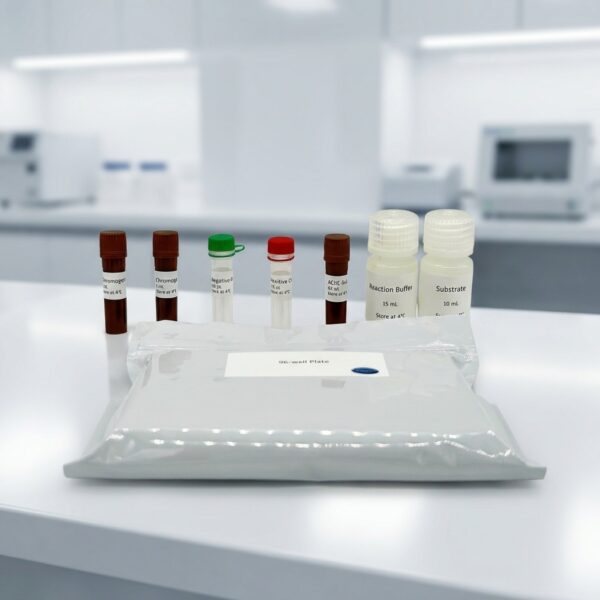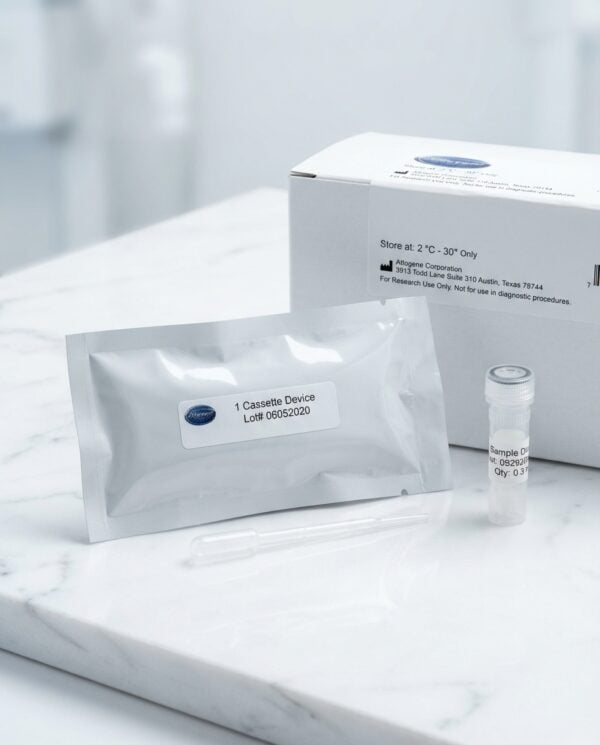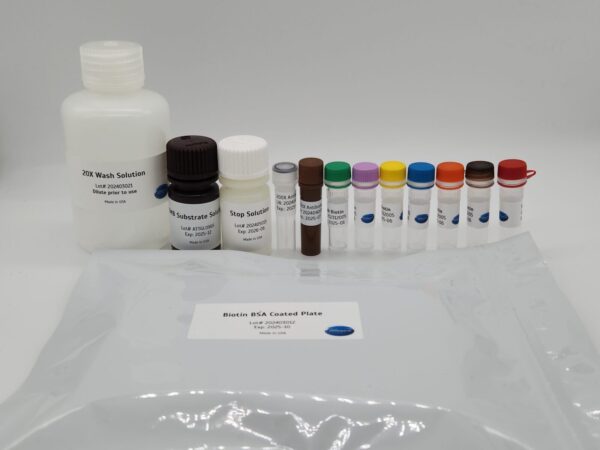

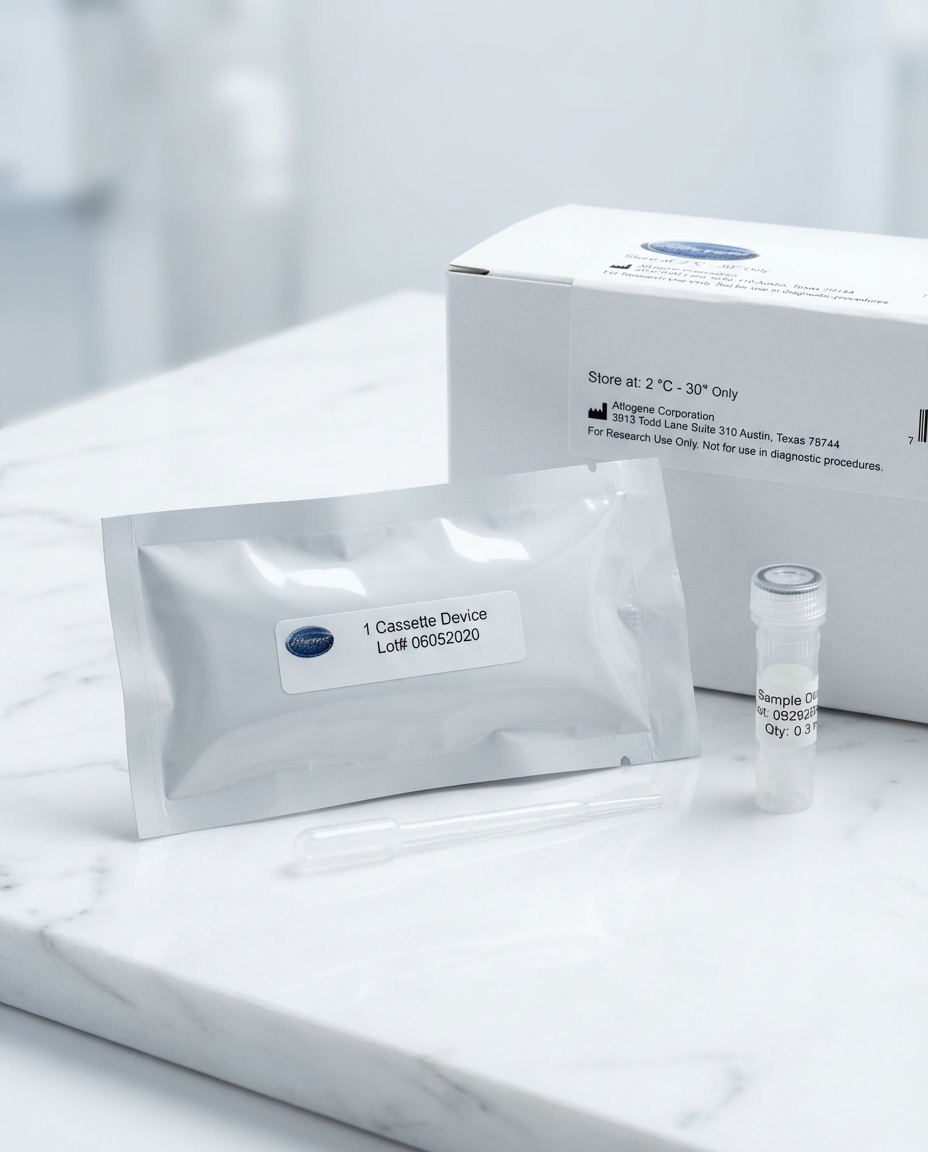


The Attogene Nicotine Rapid Detection Kit (AU2068) is a nicotine rapid test that screens liquid samples for nicotine at or above 5 ppb in 15 minutes. It is a lateral flow cassette test with a semi-quantitative range of about 5 to 100 ppb (final concentration in the sample dilution buffer). Suitable samples include water, drinks, urine and nicotine pouch extracts. The test does not detect cotinine. Each kit contains 10 cassettes.
Key Features
- Low detection level: detects nicotine at 5 ppb and above in the buffered sample.
- 15-minute run time: results are read by eye, with no instrument required.
- Semi-quantitative: upper range of about 100 ppb; run nicotine standards alongside samples to estimate concentration.
- Nicotine-specific: the test does not detect cotinine.
- Reader compatible: a lateral flow reader, such as the RDS-2500 from Detekt Biomedical, can give numerical readouts.
- Simple storage: store at 2–30 °C, with cassettes sealed in their foil pouches until use.
What’s in the Kit
Each nicotine rapid test kit includes:
- 10 nicotine cassettes, individually packaged in foil pouches with desiccant
- Sample Dilution/Running Buffer tubes, 5
- Negative Control, 150 µL, 5
- Fixed-volume pipettes, 75 µL, 10
- 10X Sample Dilution Buffer, 10 mL, for diluting concentrated samples
- Manual
You will also need: a timer, a marker for labeling, a pipette that can dispense 1–10 µL, and a nicotine control (standard) of known concentration.
Who It’s For
- Researchers screening water, drinks or urine samples for nicotine
- Product developers and QC labs verifying nicotine-containing or “nicotine-free” products
- Labs evaluating extracts from nicotine pouches and similar products
- Teams that want a fast screen before confirming by HPLC or ELISA
How to Use the Nicotine Rapid Test
Wearing gloves, remove each cassette from its foil pouch. Run the negative control first, then each sample.
- Negative control: transfer 150 µL of Negative Control directly into the sample port of a cassette, using the 75 µL pipette twice. Set a timer for 15 minutes.
- Sample: transfer 150 µL of sample into a Sample Dilution/Running Buffer tube, again using the 75 µL pipette twice.
- Mix gently by pipetting up and down 3 times.
- Transfer 150 µL from the tube into the sample port of a new cassette and set a timer for 15 minutes.
- Compare the test line of the sample cassette with the negative control cassette.
Samples with high nicotine levels need further dilution (2-, 5-, 10-, 1,000-, 10,000-fold or more) in 1X buffer, made by diluting the 10X buffer 1:10 in ultrapure or distilled water. See the AU2068 instruction manual (PDF) for full details.
Reading Results
A visible control line must be present for a result to be valid. Compare the test line of each sample with the test line of the negative control:
- Below detection: sample test line darker than or equal to the negative control test line.
- 5 ppb or more: sample test line lighter than the negative control test line.
- 100 ppb or more: no test line visible; only the control line appears.
Read results within 15 minutes of completing the procedure, as line intensities can change as strips dry. For semi-quantitative results in the 0–100 ppb range, test nicotine solutions of known concentration at the same time and compare line intensities. Do not compare against strips run earlier.
Nicotine Levels in Common Products
Nicotine products are far more concentrated than the test range, so they must be diluted before testing. Typical levels:
- Nicotine pouches: typically 3–6 mg per pouch, or millions of ppb when extracted.
- E-liquids: commonly 3–50 mg/mL (3,000,000–50,000,000 ppb). In the European Union, nicotine-containing e-liquids are limited to a maximum of 20 mg/mL.
- “Nicotine-free” products: expected to be 0 ppb, although measurable nicotine from contamination or incomplete purification has been reported.
Frequently Asked Questions
What is the detection range of the nicotine rapid test?
It detects nicotine at 5 ppb and above, with a semi-quantitative upper range of about 100 ppb, both as final concentrations in the sample dilution buffer.
Does the test detect cotinine?
No. The test cannot detect cotinine, a nicotine breakdown product.
Can I get a quantitative result?
Run a standard curve of nicotine standards alongside the samples, or use a lateral flow reader for numerical readings. Positive samples can be confirmed by ELISA, HPLC or other conventional methods.
Can the nicotine rapid test check “nicotine-free” products?
Yes. It can screen products labeled nicotine-free for detectable nicotine, which may indicate contamination or mislabeling. Confirm any positive result with an analytical method.
Is this test for clinical use?
No. It is for research use only and is not for use in diagnostic procedures.
Attogene also offers caffeine screening with lateral flow cassette kits: the Caffeine Rapid Detection Kit (Urine Compatible, AU2067) for laboratory use and the Caffeine Rapid Detection Kit – Field Use (AU2067-01) for drinks on site.
For research use only. Not for use in diagnostic procedures. Questions? Call 512-333-1330 or email sales@attogene.com.