
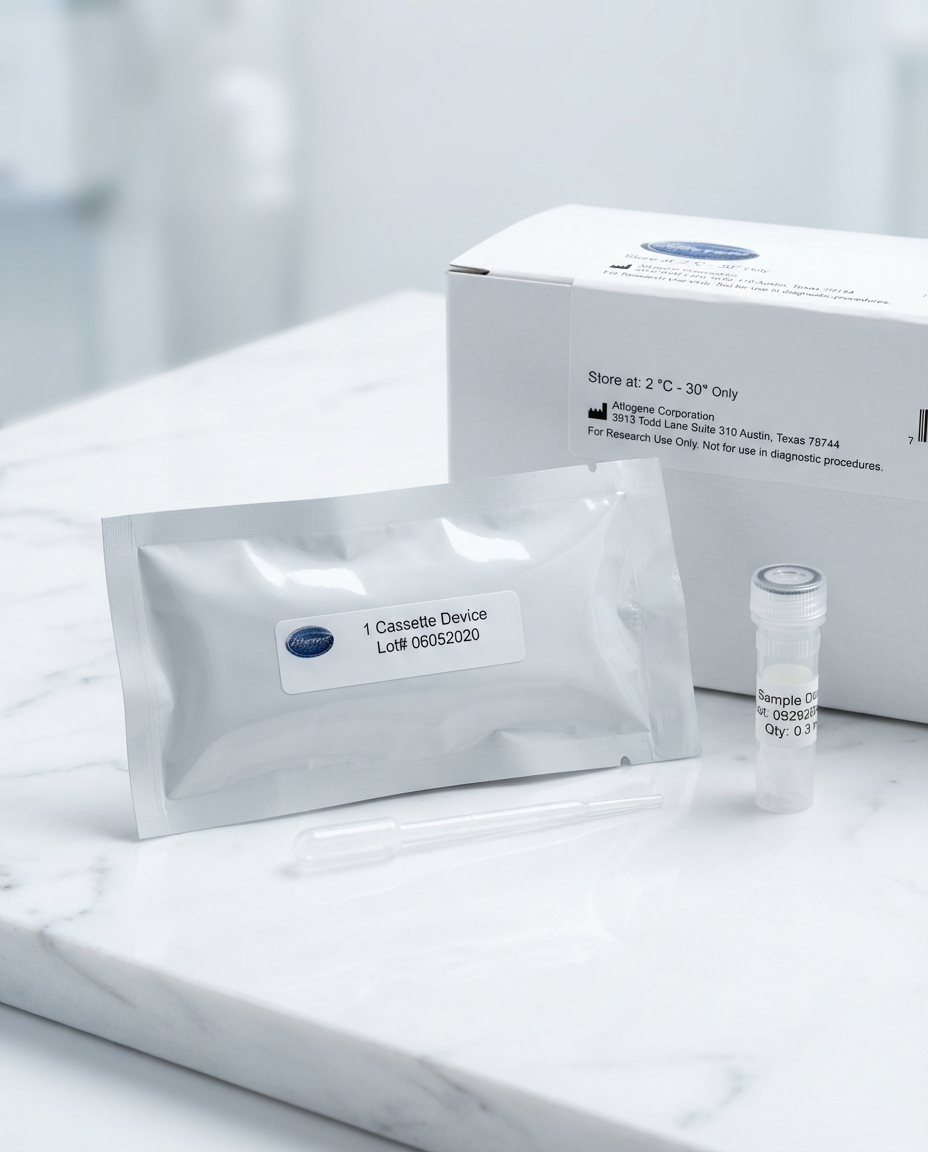
Attogene’s Caffeine Test Kit (Rapid) can be used to detect caffeine in liquid samples – water, drinks, urine.
- Format: 10 tests
- Run Time: 15 Minutes
Can easily detect >10ppb in liquid samples. Perfect for evaluation of Caffeine levels in water, drinks, urine. Did you know Studies reveal that up to 30% of decaf coffee served in coffeehouses and restaurants contains unacceptably high levels of caffeine or isnt decaf at all.
8,400 ppb to 63,300 ppb caffeine in decaffeinated coffee
Comparative levels of caffeine in drinks:
- Zero Sugar Mtn Dew: 68 mg or 380,000 ppb.
- Mountain Dew or Diet Mountain Dew: 54 mg or 300,000 ppb.
- Diet Coke: 46 mg or 260,000 ppb.
- Dr Pepper: 41 mg or 230,000 ppb.
- Coke, Coke Zero, or Pepsi: 34-38 mg or 190,000-210,000 ppb.
- Barq’s Root Beer: 22 mg or 120,000 ppb, while most root beers are caffeine-free.
Caffeine Free Soda: 0ppb
Legal and industry standards:
- In the United States, decaf coffee must have at least 97% of its caffeine removed.
- The USDA sets a maximum caffeine content of 0.10% by weight for decaffeinated coffee beans and instant coffee.
- The European Union (EU) has stricter regulations, requiring decaf coffee to contain no more than 0.1% caffeine on a dry weight basis for roasted beans and 0.3% for instant coffee.
FOR URINE:
Using gloves, remove each lateral flow cassette from the foil pouch. A marker may be used to write on the plastic cassette if desired. Perform A and B for each sample evaluation starting with the negative control first.
A. Negative Control (perform first):
o Transfer 200ul of the Negative Control (Sample Dilution/Running Buffer) directly into the sample port of the cassette with a 200ul pipette.
o Set a timer for 15 minutes.
B. Urine Sample:
o Transfer 1-20ul of the sample using a pipette into the Sample Dilution/Running Buffer tube.
o Mix the sample gently up and down 3 times using the 200ul pipette.
o Use the pipette to transfer 200ul from the tube directly into the sample port of the cassette.
o Set a timer for 15 minutes.
➢ If the sample contains 20ppm or greater caffeine (in 1ul) diluting it into the 1XPBS solu-tion 2, 5, 10, 1,000, 10,000-fold or greater may bring the result in line with expectations to calculate relative levels in the sample compared to a caffeine standard.