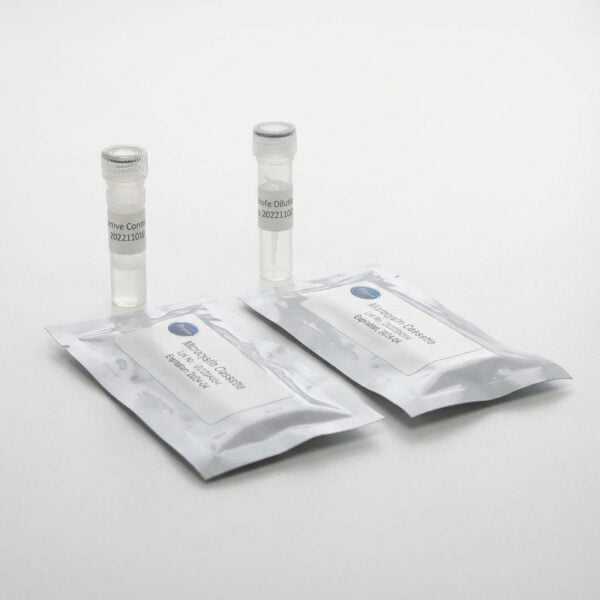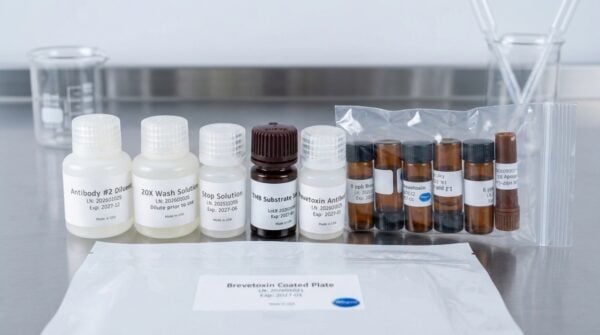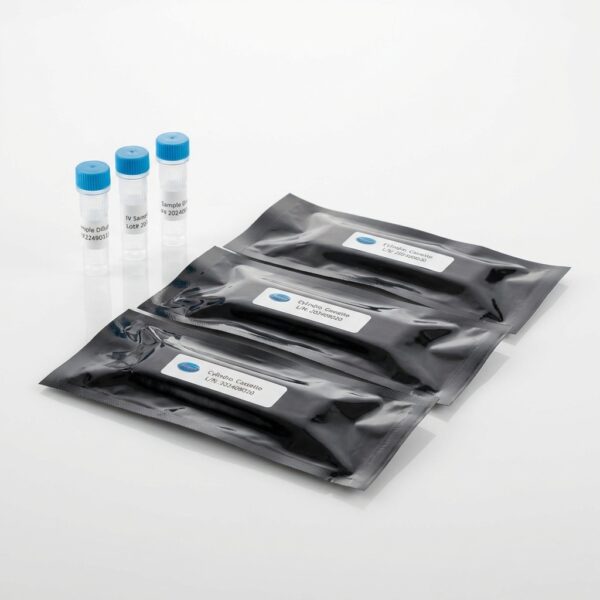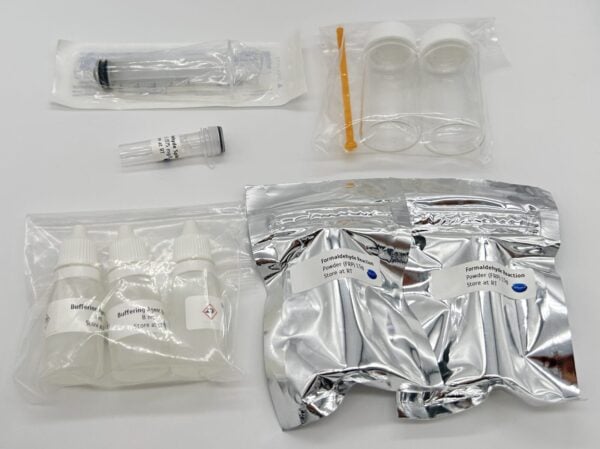





Attogene’s Microcystin Detection Kit (Rapid – Recreational Water) is a rapid microcystin test kit (lateral flow) for screening freshwater lakes, ponds, reservoirs and swimming areas for microcystins, the most common toxins produced by harmful algal blooms (HABs). Each test screens at 4 ppb (µg/L) and gives a visual result in 10 minutes, right at the shoreline, without lab equipment or electricity.
Key Features
- Screening level: 4 ppb microcystins. A missing test line indicates ≥ 20 ppb.
- Run time: 10 minutes per test
- Field-ready: everything for sample collection, filtering and testing is included. You only need a timer and a marker.
- Built-in quality check: each sample is run next to a negative control cassette, so you can compare line intensity directly.
- Room-temperature storage: store at 2–30 °C, no refrigeration required for the kit
- Format: 10 cassettes = 5 sample tests + 5 negative controls
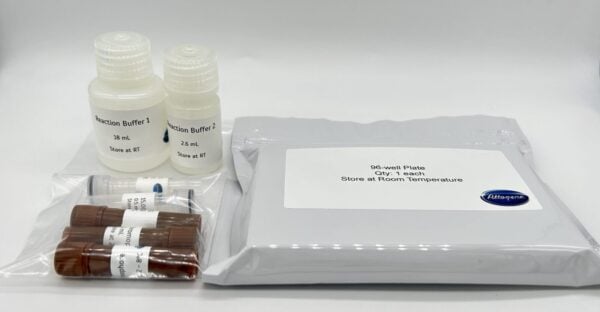
What’s in the Kit
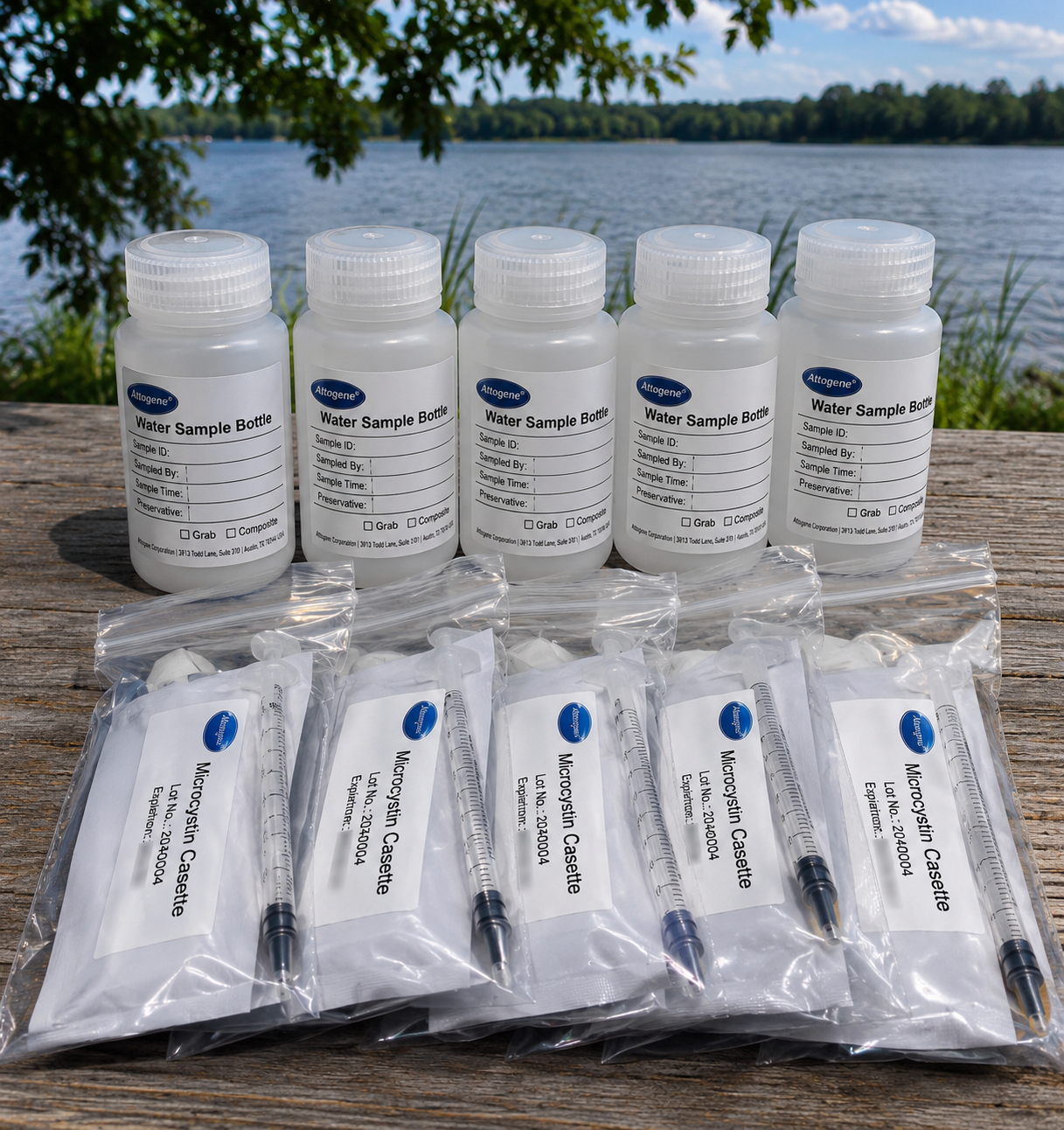
Each microcystin test kit includes:
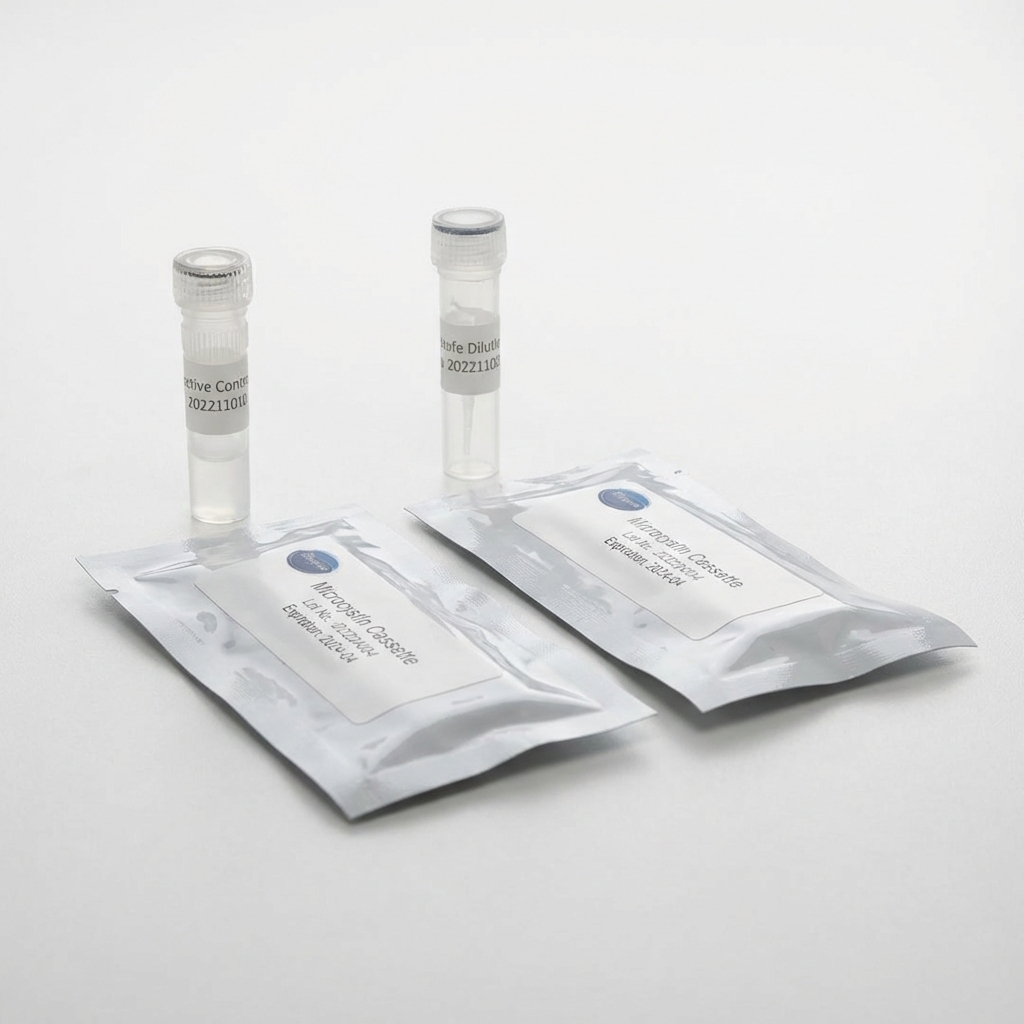
- 10 Microcystin lateral flow cassettes (individually foil-pouched with desiccant)
- 5 Water sample bottles (125 mL)
- 5 Sample filters
- 5 Sample dilution buffer tubes
- 5 Negative control tubes
- 5 Syringes (1 mL)
Need to test more samples? Sample Dilution Buffer packs (5 or 10 pack) are available as an add-on above.
Who It’s For
- Lake, reservoir and park managers monitoring swimming and boating areas
- Water quality programs and environmental consultants doing HAB surveillance
- Universities and researchers studying cyanobacteria and cyanotoxins
- Lake associations and property owners checking water during a suspected bloom
How to Use the Microcystin Test Kit
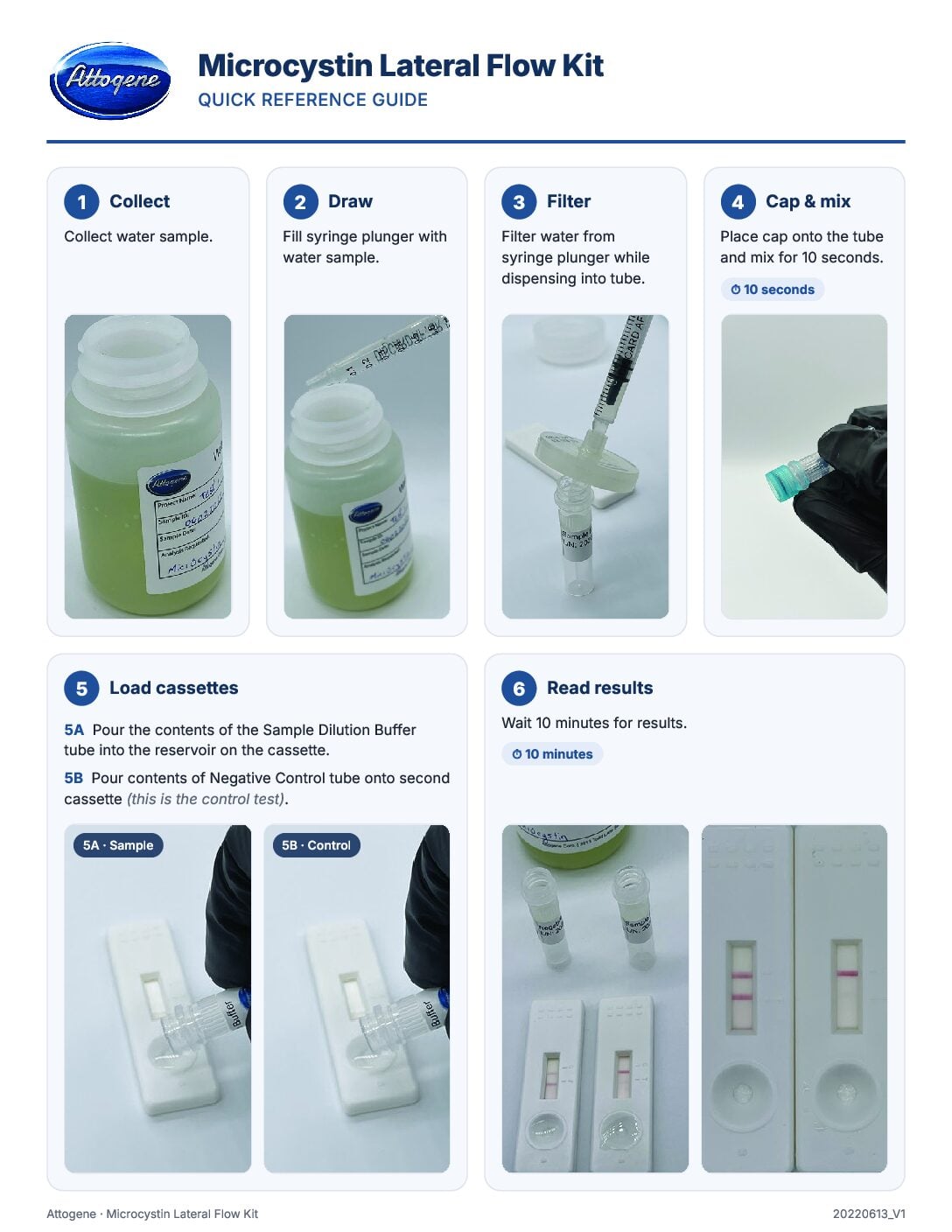
- Collect water into the 125 mL sample bottle (wear gloves). Bring the sample and kit to room temperature.
- Run the negative control: transfer 200 µL of negative control into a cassette and start a 10-minute timer.
- Prepare the sample: draw 1 mL of water, push it through the debris filter into the dilution buffer tube, and mix gently.
- Run the sample: transfer 200 µL to a second cassette and start a 10-minute timer.
- Read: compare the sample’s test line to the negative control’s test line.
Full step-by-step instructions are in the AU2024 product insert (PDF).
Reading Your Results
- Test line as dark as or darker than the control’s test line: below the detection limit (< 4 ppb)
- Test line lighter than the control’s test line: ≥ 4 ppb microcystins
- No test line (control line only): ≥ 20 ppb microcystins
A visible control line is required for a valid result. For semi-quantitative estimates in the 0–20 ppb range, run microcystin standards of known concentration alongside your samples. A lateral flow reader can also be used to get a numerical reading.
Why Test for Microcystins?
Microcystins are liver toxins (hepatotoxins) produced by cyanobacteria, also called blue-green algae, during harmful algal blooms. They are the most frequently reported cyanotoxins in fresh water. Chemically, they are cyclic peptides of seven amino acids, with molecular weights of about 900–1,100 Da. Contact with or swallowing contaminated water can harm people, and pets and livestock are especially at risk.
Many states use a tiered advisory system for recreational waters based on microcystin levels. Depending on how severe a bloom is, advisories range from caution signs, to public health warnings, to temporary no-contact closures. Rapid screening on site helps you decide quickly where to sample further, when to post advisories, and which samples to send to a lab.
Frequently Asked Questions
How long does the microcystin test take?
Each cassette develops in 10 minutes. Including sample prep, you can screen a water sample in about 15 minutes.
What concentration of microcystins does it detect?
The kit screens at 4 ppb (µg/L). If no test line appears at all, the sample contains 20 ppb or more.
Is this a quantitative test?
No. It is a qualitative screening test. You can get semi-quantitative estimates by running standards of known concentration alongside your samples. Confirm results that require regulatory action by ELISA, HPLC or other conventional lab methods. For a quantitative lab result, use the Microcystin ELISA Kit (EL2024-02) or the Congener-Independent Microcystin/Nodularins ELISA Kit (EL2024-05).
Can I use it for drinking water?
This microcystin test kit is designed for recreational fresh water. For treated drinking water, use the Microcystin Detection Kit (Rapid – Finished Drinking Water). For laboratory workflows, see the Microcystin Detection Kit (Rapid – Lab).
How should I store samples and the kit?
Store the microcystin test kit at 2–30 °C, and keep cassettes sealed in their pouches until use. Refrigerate water samples for up to 5 days, or freeze them for longer storage. Let everything reach room temperature before testing.
How many samples can I test with one kit?
Each microcystin test kit covers five samples, each paired with its own negative control. Extra sample dilution buffer is sold separately.
Does it detect other algal toxins?
This kit is designed to screen for microcystins. For other cyanotoxins, see our Anatoxin-a Rapid Detection Kit and Cylindrospermopsin Rapid Detection Kit. For passive, time-integrated monitoring, try the SPATT Bag Set.
Not sure which test you need? Read our guide: Microcystin ELISA vs. Rapid Test Strips vs. qPCR: How to Choose a Microcystin Test.
More Microcystin Testing from Attogene
- Microcystin ELISA Kit (EL2024-02): quantitative lab confirmation down to 0.05 ppb
- Congener-Independent Microcystin/Nodularins ELISA Kit (EL2024-05): total microcystins, compatible for use with US EPA Method 546
- Microcystin qPCR Detection Kit: detects the mcyE toxin gene to flag toxin-producing blooms early
Resources: Student project using Attogene microcystin test strips · Microcystin: the toxin produced by harmful algal blooms
For research use only. Not for use in diagnostic procedures. Questions? Call 512-333-1330 or email sales@attogene.com.