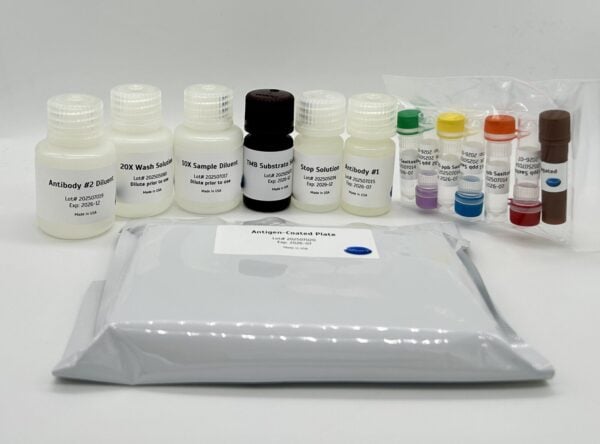

The Tetrodotoxin ELISA Kit (EL2057-01) is a competitive enzyme immunoassay for quantitative analysis of tetrodotoxin (TTX). It comes in a 96-well microtiter plate format (12 strips of 8 wells) with five standards from 0 to 100 ppb, a detection limit of 5 ppb in water, and a total incubation time of 75 minutes, read at 450 nm.
Tetrodotoxin and its analogues are potent neurotoxins produced by marine bacteria. The toxin accumulates in certain fish, most notably pufferfish, and has also been found in bivalves such as clams, oysters and mussels and in gastropods. TTX blocks voltage-gated sodium channels, and ingestion of contaminated seafood can be fatal. Japan applies a regulatory limit of 2000 µg/kg in pufferfish tissue, and the European Food Safety Authority (EFSA) has indicated that TTX and analogues at or below 44 µg/kg in shellfish meat should not cause adverse effects in humans. Traditional confirmatory methods such as LC-MS and HPLC require instrumentation and reference standards, so a plate immunoassay is a practical screening tool for research labs.
Key Features
- Quantitative: five calibrators (0, 5, 10, 50 and 100 ppb) define a standard curve from 5 to 100 ppb.
- Performance in water: 5 ppb detection limit, 80 ± 10% accuracy, and a kit CV below 10%.
- 75-minute incubation: two 30-minute antibody steps and a 15-minute substrate step at room temperature.
- Breakable format: 96-well plate in 12 strips of 8 wells, so you can run only the wells you need.
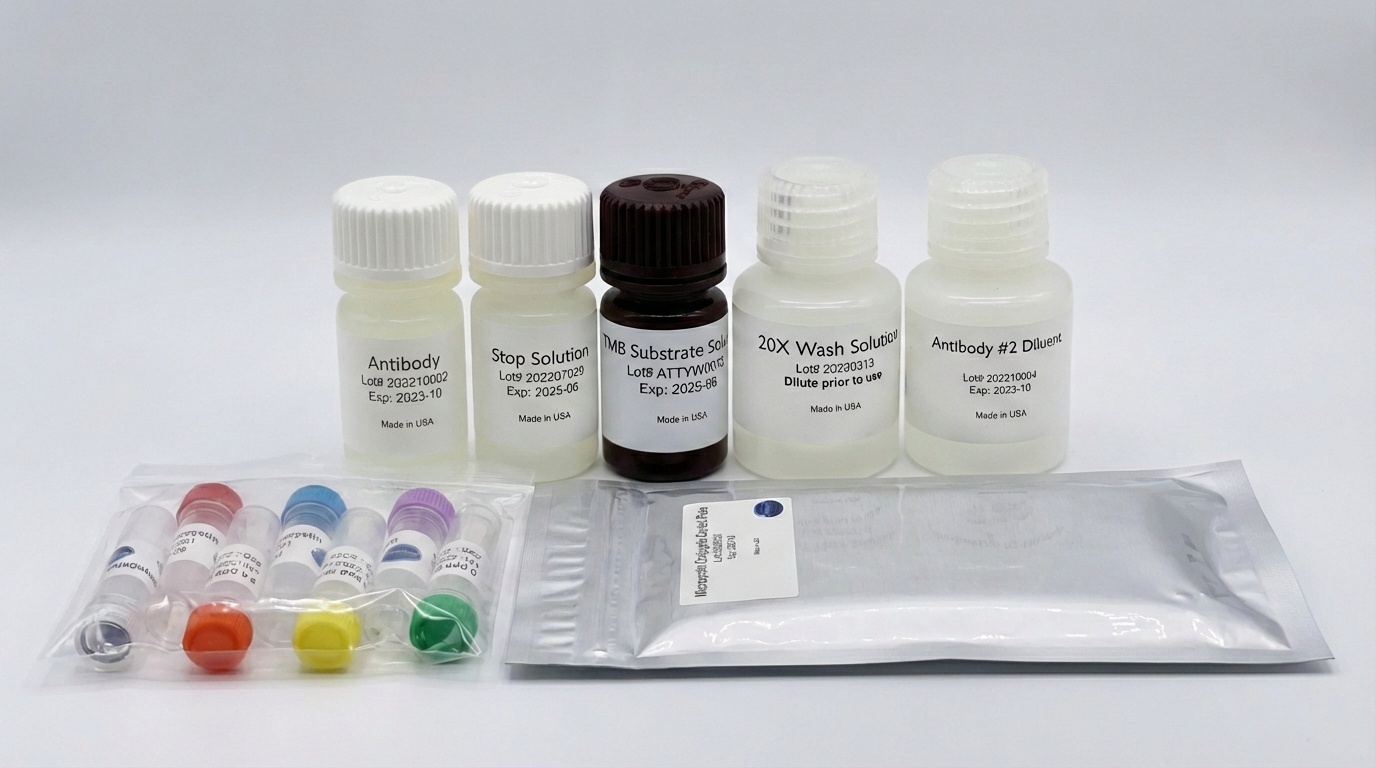
- Color-coded standards: green, purple, yellow, blue and orange caps for quick identification.
- Storage: 2–8 °C, protected from light; 12 months or until the expiration date.
What’s in the Kit
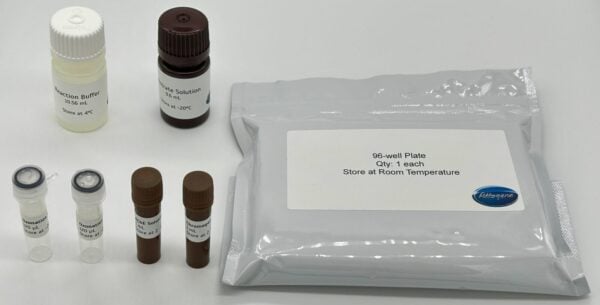
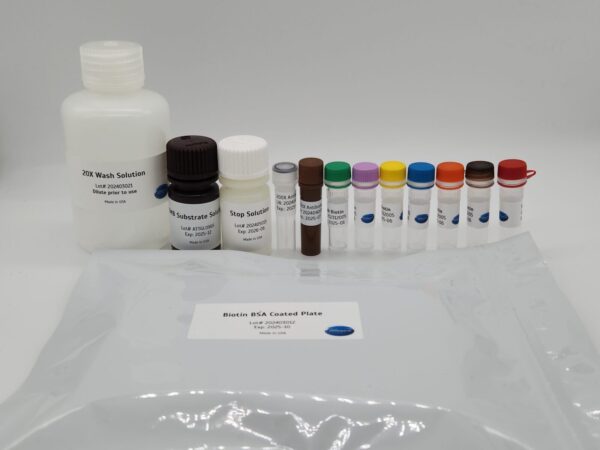
Each tetrodotoxin ELISA kit includes:
- Microtiter plate with 96 wells coated with TTX
- TTX standards, 5 vials × 0.8 mL: 0 ppb (green cap), 5 ppb (purple), 10 ppb (yellow), 50 ppb (blue), 100 ppb (orange)
- TTX Antibody#1, 11 mL
- 100X HRP-conjugated Antibody#2, 0.25 mL
- Antibody#2 Diluent, 20 mL
- 20X Wash Solution, 28 mL
- TMB Substrate Solution, 12 mL
- Stop Solution, 14 mL
You will also need: an ELISA plate reader (450 nm/630 nm), deionized water, vortex mixer, centrifuge, timer, wash bottle, 50 mL and 2 mL polystyrene centrifuge tubes, micropipettes (20–200 µL and 100–1000 µL) with tips, and an 8-channel pipette (50, 100 and 150 µL).
Who It’s For
- Marine toxin and seafood safety research laboratories
- Environmental labs studying TTX in coastal and marine waters
- Academic groups researching toxin-producing bacteria and toxin accumulation
- Labs that want a quantitative screen before confirming samples by LC-MS or HPLC
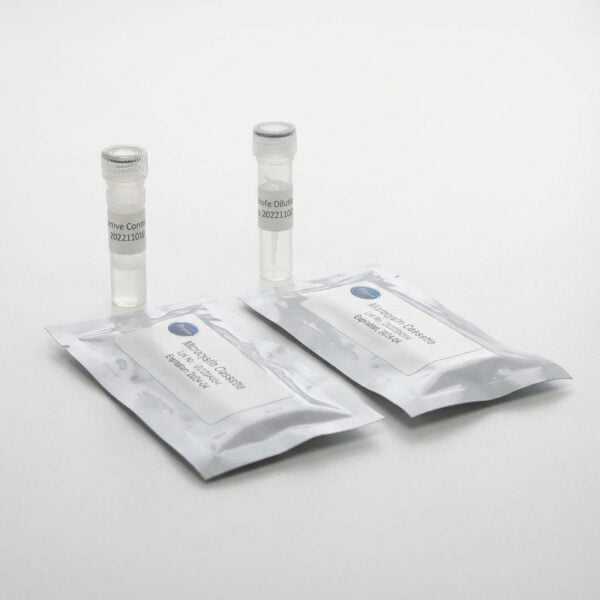
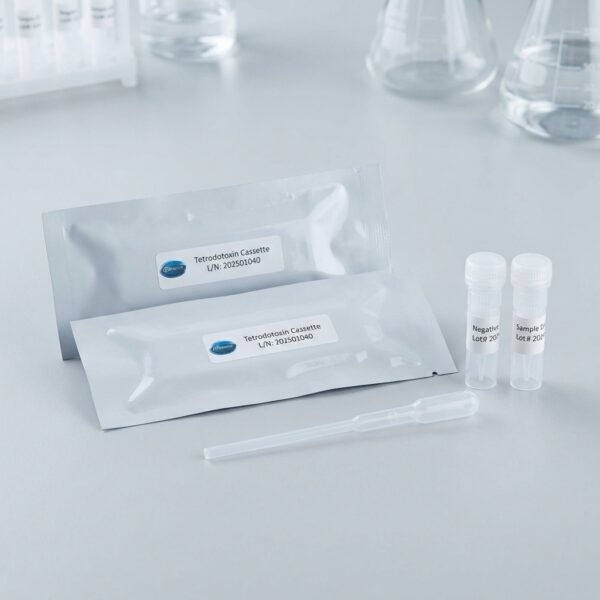
For quick yes/no screening without a plate reader, see the Tetrodotoxin (TTX) Detection Lateral Flow Kit.
How to Use the Tetrodotoxin ELISA Kit
- Bring all reagents and microwells to room temperature (20–25 °C) for at least 30 minutes. Prepare 1X Wash Solution (1 part 20X concentrate to 19 parts deionized water) and fresh 1X HRP-conjugated Antibody#2 (1 part to 99 parts Antibody#2 Diluent).
- Plan the plate layout; run all standards and samples in duplicate. Return unused strips to the foil pouch at 2–8 °C.
- Add 50 µL of TTX standard or sample to each well, then 100 µL of Antibody#1. Shake gently for 30 seconds, cover and incubate 30 minutes at room temperature.
- Decant, wash three times with 250 µL of 1X Wash Solution and tap dry on absorbent paper.
- Add 150 µL of 1X HRP-conjugated Antibody#2, shake, cover and incubate 30 minutes at room temperature. Wash three times as before.
- Add 100 µL of TMB Substrate Solution and incubate 15 minutes at 25 °C, covered.
- Add 100 µL of Stop Solution, mix gently and read absorbance at 450 nm within 5 minutes.
See the Tetrodotoxin ELISA Kit Manual (EL2057-01) for complete instructions and precautions.
How It Works and Reading Results
TTX in the sample and TTX antigen on the plate compete for binding to Antibody#1. After washing, an HRP-conjugated secondary antibody is added, and the TMB substrate develops a blue color in proportion to the bound enzyme. Higher TTX concentrations give lower absorbance.
Express each standard and sample as a percentage of the zero standard (B/B0 × 100%), plot against the log of standard concentration, and read sample values from the curve, multiplying by any dilution factor. If a sample’s absorbance is lower than the 100 ppb calibrator, dilute it and rerun so it falls within the 5–100 ppb range.
Frequently Asked Questions
What sample types does the tetrodotoxin ELISA kit support?
The current manual lists water samples, and its detection limit and accuracy figures are given for water. Contact us before using other matrices so we can discuss sample preparation.
How is this different from the TTX lateral flow kit?
The ELISA gives quantitative results from a standard curve and needs a plate reader. The lateral flow kit is a rapid strip format for screening without instruments.
How long does the assay take?
Incubations total 75 minutes, plus 30 minutes for reagents to reach room temperature and time for washing and setup.
Can I run part of a plate?
Yes. The plate is made of 12 strips of 8 wells; return unused strips to the foil pouch at 2–8 °C right away.
How do I check reagent quality?
The TMB substrate should be clear before use. A zero-standard absorbance below 0.5 at 450 nm suggests that one or more reagents have gone bad. Use reagents and standards from the same kit only.
Related Products
Attogene also offers plate-based kits for environmental contaminants in water, such as the Atrazine ELISA Kit and the Imidacloprid ELISA Kit.
For research use only. Not for use in diagnostic procedures. Questions? Call 512-333-1330 or email sales@attogene.com.