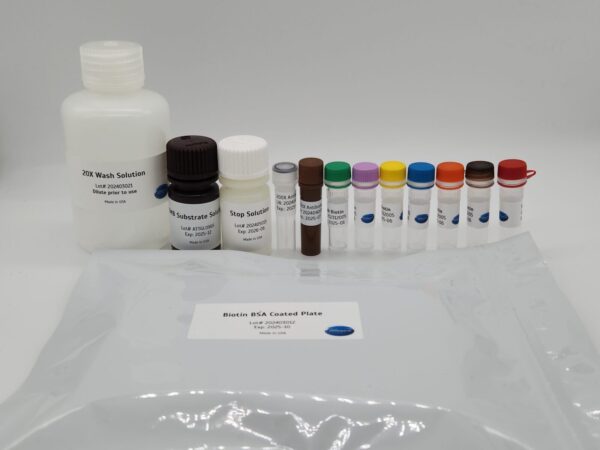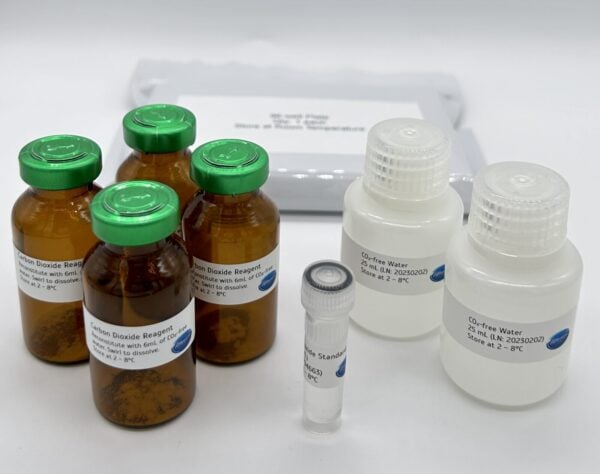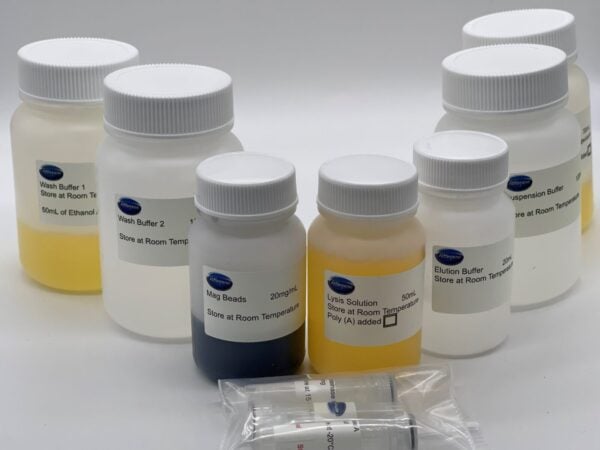

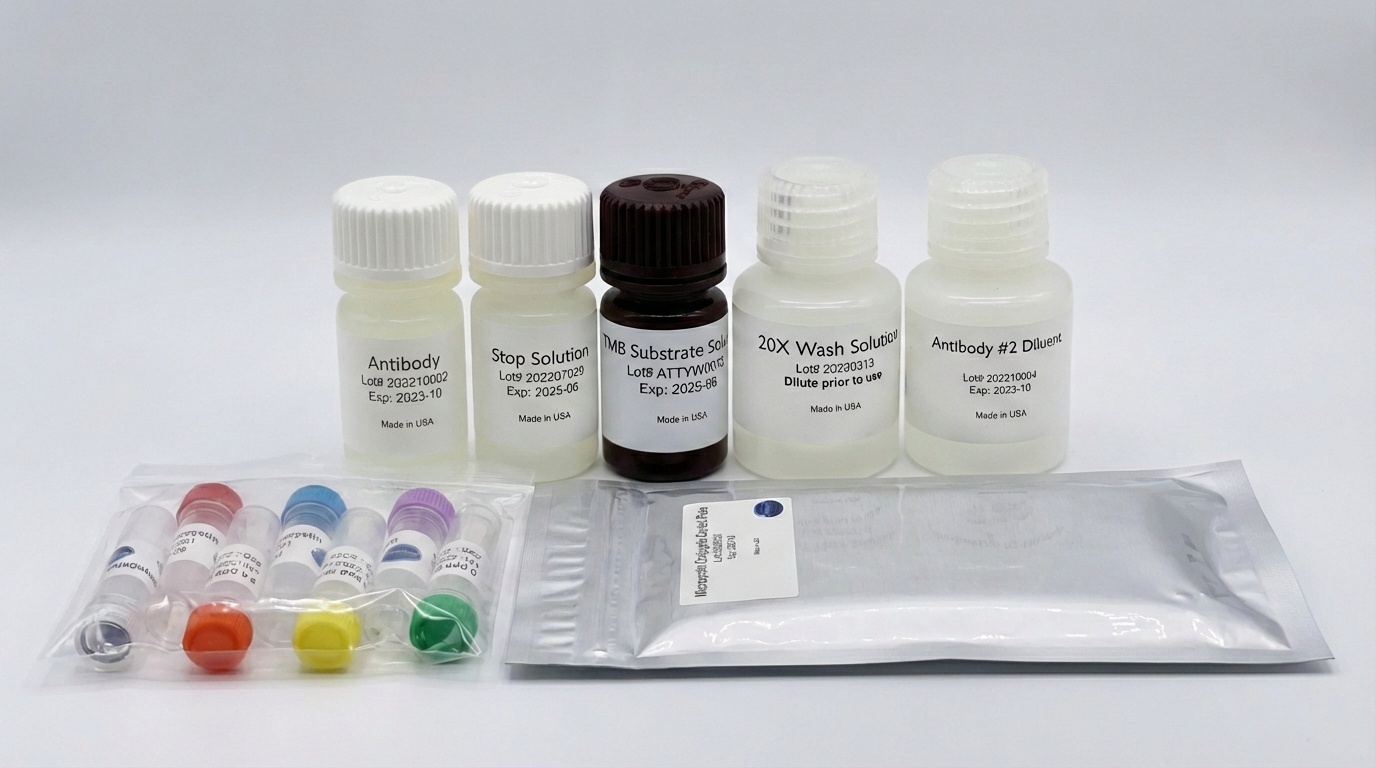
The Mercury Ion ELISA Kit (EL2067) is a mercury ELISA kit for quantitative screening of mercury ions in a 96-well microtiter plate format. The plate is supplied as 12 test strips of 8 wells, so you can run only the strips you need, and the kit has a limit of detection (LOD) of 1.5 ppb. It belongs to Attogene’s heavy metals ELISA line, alongside matching kits for lead and cadmium.
Mercury is a persistent environmental contaminant. It is difficult to remove by chemical or biological treatment and can build up in aquatic food chains. A plate-based immunoassay gives laboratories a practical way to screen batches of samples for mercury ions and decide which ones need confirmatory analysis.
Key Features
- Quantitative results: reports a mercury ion concentration, not just a yes/no answer.
- Low detection limit: LOD of 1.5 ppb.
- Flexible strip format: 96-well microtiter plate made up of 12 test strips of 8 wells; use only the strips a run requires.
- Robust and easy to use: a standard microplate ELISA workflow that fits routine lab equipment.
- Batch screening: process many samples on a single plate.
What’s in the Mercury ELISA Kit
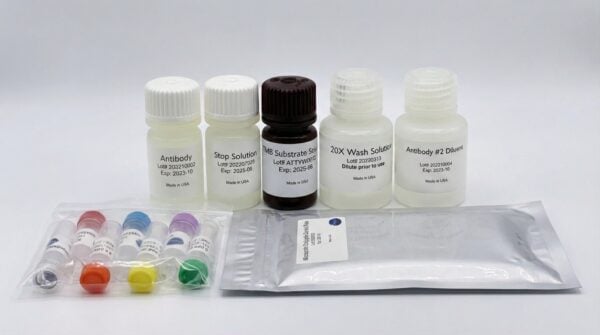
Each mercury ELISA kit includes:
- One 96-well microtiter plate, supplied as 12 test strips of 8 wells
The complete component list, volumes and storage conditions are provided in the kit instructions. To review them before ordering, email sales@attogene.com.
You will also need: standard ELISA laboratory equipment, such as precision pipettes and a microplate reader. The kit instructions list any other materials required but not supplied.
Who It’s For
- Environmental and water testing laboratories screening for mercury contamination
- Academic and government researchers studying heavy metals in the environment
- Food and seafood research groups; applications for fish and shellfish may be possible, so contact us to discuss your sample type
- Labs that want to triage many samples before sending selected ones for instrumental confirmation
How to Use the Mercury ELISA Kit
The mercury ELISA kit follows a standard microplate ELISA workflow. Always follow the kit instructions for exact volumes, incubation times and temperatures.
- Prepare your samples as the kit instructions direct for your sample type.
- Remove the number of 8-well strips you need and return unused strips to storage as directed.
- Add the kit standards and your samples to the wells.
- Carry out the incubation and wash steps exactly as written.
- Develop the plate and read it on a microplate reader at the specified wavelength.
- Calculate mercury ion concentrations from the standard curve.
A downloadable manual is not currently posted for this kit. To request the current instructions for use, contact sales@attogene.com.
Interpreting and Confirming Results
Because results are quantitative, you can compare each sample against your own action thresholds. For context, the U.S. EPA maximum contaminant level for inorganic mercury in drinking water is 2 ppb (0.002 mg/L), and the kit’s 1.5 ppb LOD sits below that value. For seafood work, the FDA publishes reference data on mercury levels in commercial fish and shellfish.
Samples requiring regulatory action should be confirmed with a reference laboratory method, such as ICP-MS.
Mercury ELISA or Rapid Mercury Test?
Attogene also offers two lateral flow formats for mercury. The Mercury Detection Kit (Rapid – Field Use) is designed for testing outside the lab, and the Mercury Detection Kit (Rapid – Lab) is a strip test for the bench. Choose the ELISA when you need quantitative results for many samples on one plate; choose a rapid test for quick checks of individual samples.
Testing for more than one metal? The Lead Ion ELISA Kit (EL2068) and the Cadmium Ion ELISA Kit (EL2069) use the same 96-well strip format.
Frequently Asked Questions
What is the detection limit of the mercury ELISA kit?
The limit of detection (LOD) is 1.5 ppb.
Is the mercury ELISA kit quantitative?
Yes. Sample concentrations are calculated from a standard curve, so you get a numeric result for each sample.
How many samples can I run on one plate?
The plate has 96 wells arranged as 12 strips of 8. The number of samples per run depends on how many wells you assign to standards and replicates, as described in the kit instructions. Since you can run only the strips you need, there is no need to fill a whole plate each time.
What sample types can I test?
Attogene’s ELISA kits are built for environmental, water, food and feed testing, and fish and shellfish applications may be possible with this kit. Contact us to confirm sample preparation for your matrix before you order.
Do results need to be confirmed?
Yes, when they matter for compliance. Samples requiring regulatory action should be confirmed by a reference laboratory method.
For research use only. Not for use in diagnostic procedures. Questions? Call 512-333-1330 or email sales@attogene.com.