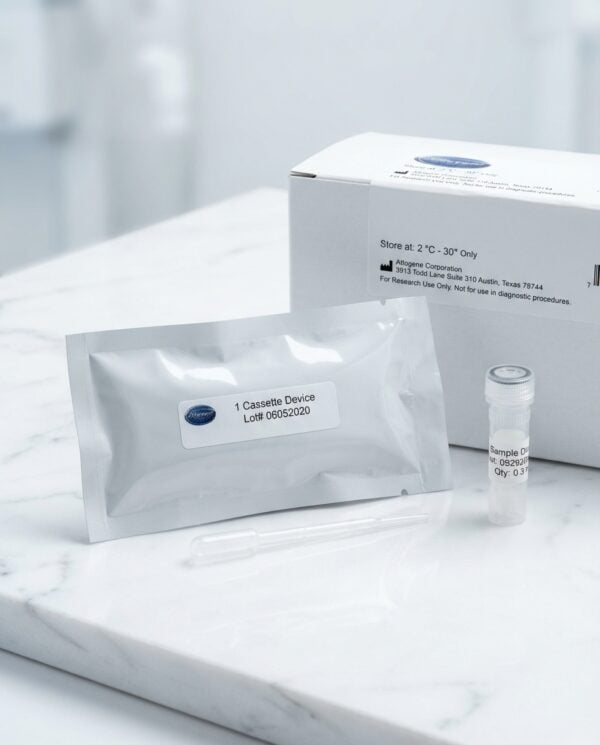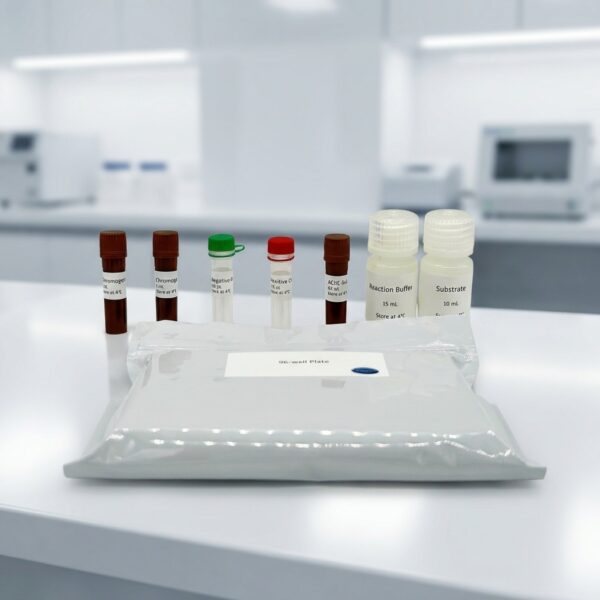


RNase H Lateral Flow Activity Assay Kit (catalog AU2045) is a patent-pending RNase H activity assay that measures ribonuclease H on ready-to-run lateral flow dipsticks. Each kit includes 50 dipsticks (4.5 mm) and a 96-well plate. In Attogene’s technical note, the assay detects as little as 0.07 units of RNase H after a 1-hour reaction at 37 °C and a 15-minute strip run.
RNase H specifically hydrolyzes the RNA strand of an RNA/DNA hybrid. The kit uses a labeled RNA/DNA hybrid substrate, so cleavage by RNase H shows up as a drop in test line signal that can be read by eye or quantified in a lateral flow reader.
Key Features
- Hybrid substrate: a 5′-biotin-RNA/DNA-3′-FAM hybrid substrate targets the activity that defines RNase H.
- High sensitivity: detects as few as 0.07 units of RNase H, according to the technical note.
- Quantitative signal: the decrease in test line is directly related to the amount of RNase H activity in the sample.
- Control line on every strip: a biotin- and DIG-labeled single-stranded DNA control oligonucleotide confirms the strip ran.
- Flexible substrate: a user-supplied substrate can be added in place of the kit substrate to study substrate specificity.
- Simple equipment: a pipette, a 37 °C incubation and a timer; a reader is optional for numerical results.
What’s in the Kit
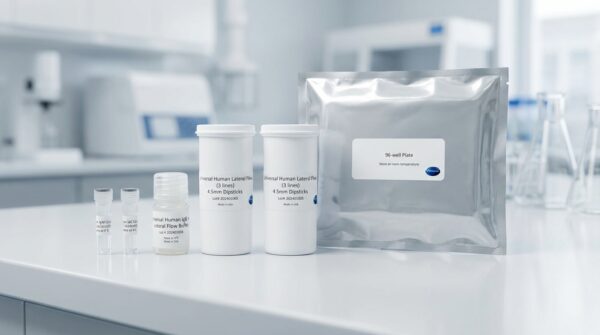
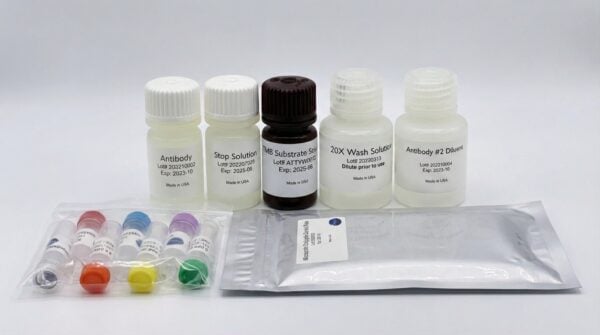
Each RNase H activity assay kit includes:
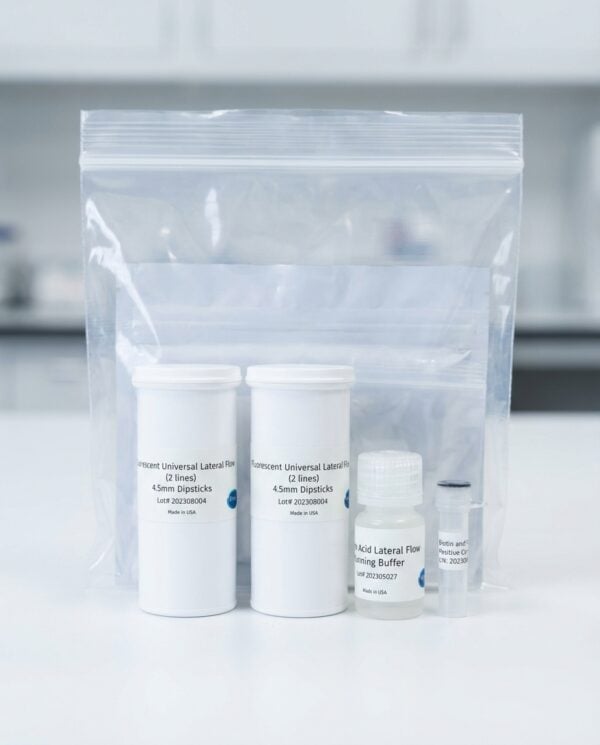
- 50 lateral flow dipsticks (4.5 mm) with streptavidin colloidal gold in the conjugate pad
- RNase H Reaction Buffer
- 2X RNase H Running Buffer
- RNase H Substrate (RNA/DNA hybrid)
- Control Line Oligonucleotide
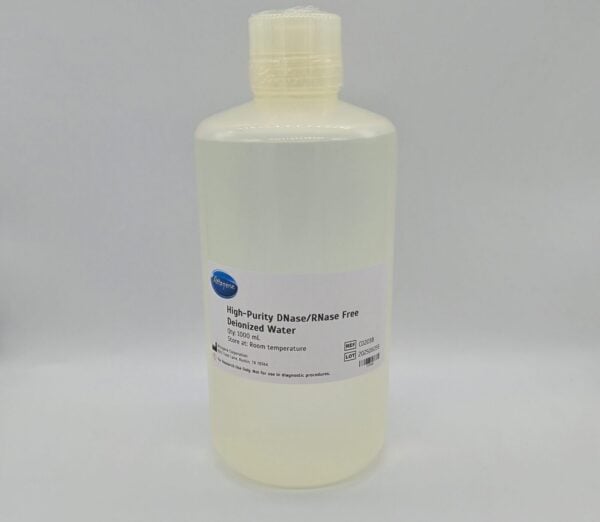
- RNase-Free Water
- One 96-well plate
You will also need: pipettes and RNase-free tips, a way to incubate the plate at 37 °C, a timer and, for quantitative work, a lateral flow strip reader. Extra DNase/RNase-free water is available for dilutions.
Who It’s For
- Enzyme manufacturers: monitor unit activity of RNase H preparations, or check for residual RNase H activity in products and buffers.
- Drug discovery groups: RNase H is a target for antiviral therapeutics, and the format supports RNase H drug activity testing and screening of inhibitors and activators.
- Nucleic acid chemistry labs: compare substrate preference and the effect of base modifications on RNA/DNA substrates.
- Reverse transcription workflows: confirm RNase H activity or inactivation in enzyme mixes.
How to Use the RNase H Activity Assay
The technical note describes this workflow; follow the instructions supplied with your kit for exact volumes.
- In a well of the 96-well plate, combine 75 µL of RNase H Reaction Buffer with the control oligonucleotide and the RNA/DNA substrate.
- Add the sample, a negative control or an RNase H positive control.
- Incubate for 1 hour at 37 °C.
- Add 75 µL of 2X RNase H Running Buffer and mix.
- Place a lateral flow dipstick in each well and run for 15 minutes at room temperature.
- Read the strips by eye or in a lateral flow reader.
Background, figures and example data are in the RNase H assay technical note (PDF).
How It Works and Reading Results
Streptavidin colloidal gold in the strip’s conjugate pad binds the biotin on both oligonucleotides. Anti-FAM antibody at the test line captures intact hybrid substrate, and anti-DIG antibody at the control line captures the control oligonucleotide. When RNase H cleaves the RNA strand of the hybrid, the biotin and FAM tags are separated and less gold reaches the test line.
- No RNase H: both the test line and the control line are present.
- RNase H present: the test line decreases as RNase H activity increases.
- Quantifying: in the technical note, strips were read on a Detekt RDS 2500 lateral flow reader, which reports test and control line values and their ratio.
Custom Substrates
Because the reaction runs in a well before the strip is added, a user-supplied biotin/FAM-labeled RNA/DNA substrate can replace the kit substrate. This makes it practical to evaluate different substrates, enzymes and inhibitors or activators on the same strip format. Labs building wider nucleic acid assays can also use our NALF barcode test strips.
Frequently Asked Questions
How sensitive is the RNase H activity assay?
Attogene’s technical note reports detection of as little as 0.07 units of RNase H, with the test line decrease directly related to the amount of RNase H activity.
What does a weaker test line mean?
A test line weaker than the negative control indicates RNase H cleaved the RNA strand of the hybrid substrate. The control line should still appear.
Can I use my own substrate?
Yes. A user-supplied RNA/DNA substrate can be added in place of the kit substrate to study substrate specificity or base modifications.
Can the kit check for residual RNase H?
Yes. This RNase H activity assay suits monitoring of unit activity and residual RNase H activity, as well as RNase H inactivation studies.
Do you offer related nuclease tests?
Yes. The RNaseAlarm Lateral Flow RNase Activity Assay Kit detects ribonucleases such as RNase A, and the DNaseAlarm Lateral Flow DNase Activity Assay Kit detects DNase activity.
For research use only. Not for use in diagnostic procedures. Questions? Call 512-333-1330 or email sales@attogene.com.