


The Lateral Flow Development Starter Kit (AU2059) is a lateral flow starter kit that gives your lab a ready-made set of materials for proof-of-concept assay development. It contains 480 blank 4.5 x 60 mm strips in 24 combinations of four nitrocellulose membranes, three pad options and two wicks, so a new assay can be screened across membranes, pads and wicks side by side.
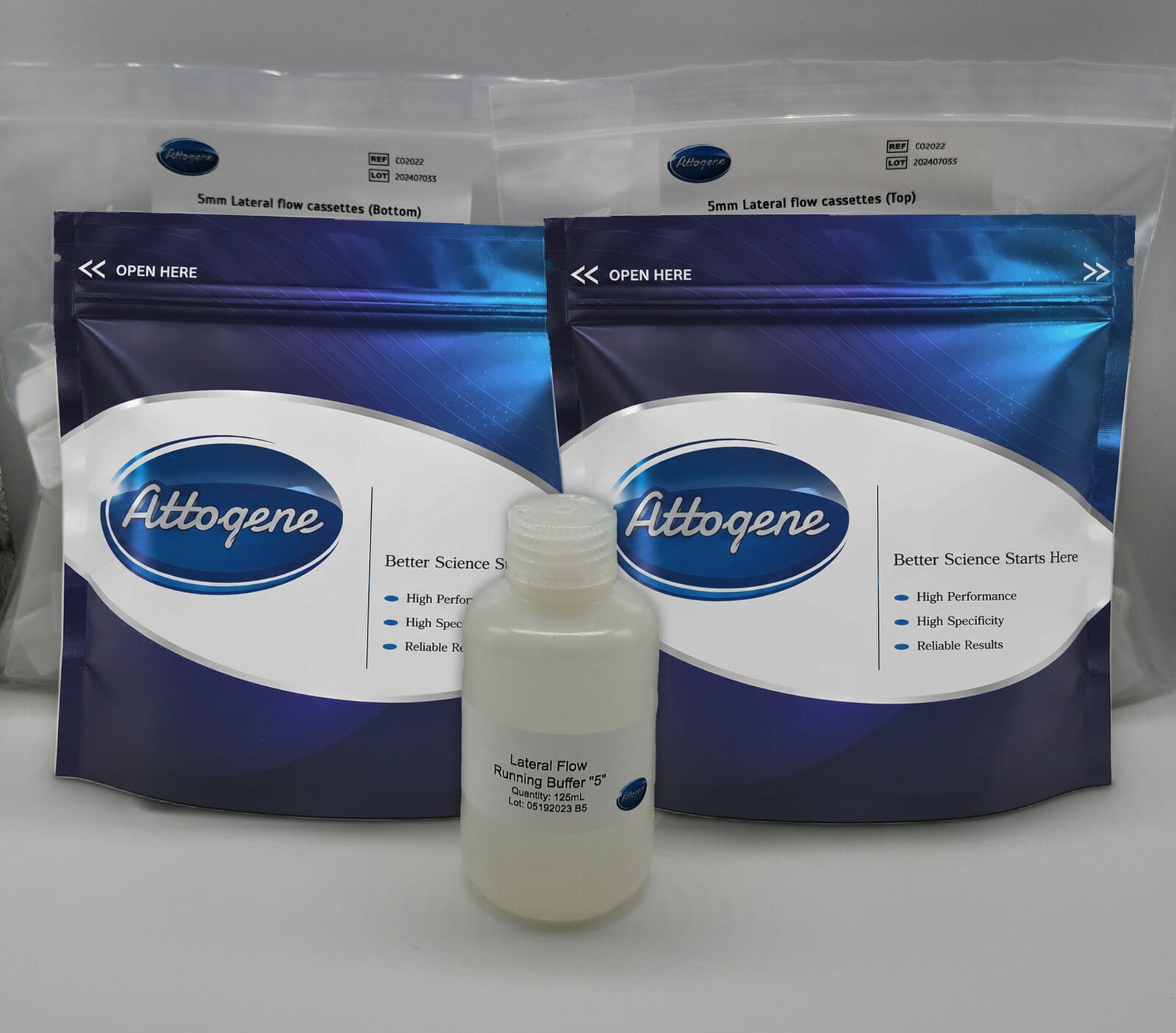
The kit also includes 100 blank lateral flow cassettes and 125 mL of running buffer. You add your own capture reagents and reporter, then spot test and control reagents at different concentrations, volumes and buffer conditions to find what works before committing to striping or spraying full cards.
Key Features
- 24 strip configurations: Every combination of 4 membranes, 3 pads and 2 wicks, 20 strips of each, one type per labeled bag.
- Four nitrocellulose pore sizes: 8, 10, 12 and 15 µm membranes let you balance sensitivity against migration speed.
- Three pad options: An untreated glass fiber pad that serves as both sample and conjugate pad, and two treated sample pads over an untreated 10 mm conjugate pad that can hold your own dried conjugate.
- Two wick types: Cellulose fiber for medium absorption, or high-purity cotton fiber for slow absorption and high capacity.
- Dipstick or cassette format: Run strips directly in a well or tube, or load them into the 100 included cassettes.
- Clearly labeled: Each bag is labeled with membrane, pad and wick codes so results can be traced to a configuration.
What’s in the Kit
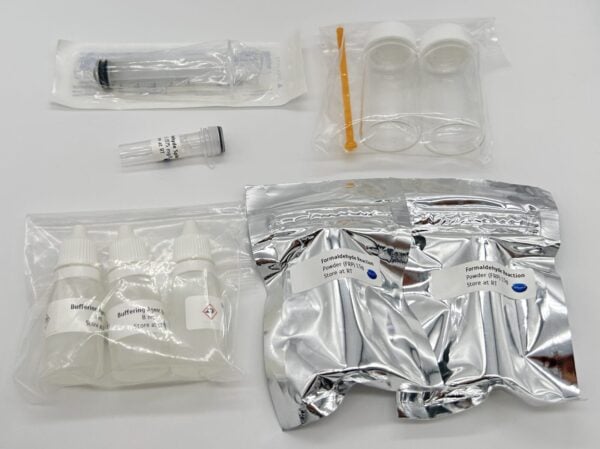
Each lateral flow starter kit includes:
- Blank lateral flow strips, 4.5 x 60 mm, 24 types: 20 of each (480 strips), stored at room temperature and low humidity in the sealed kit bag with desiccant
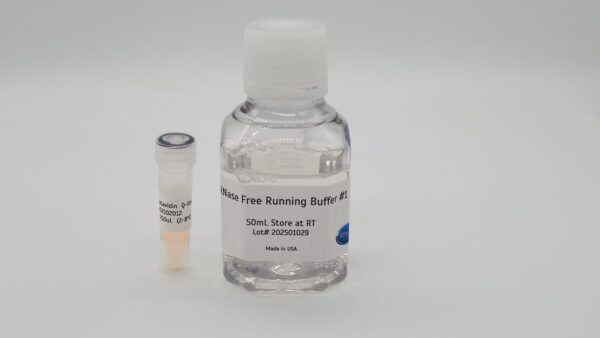
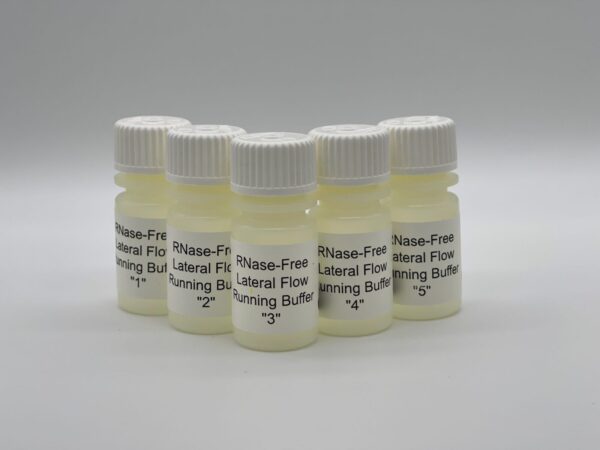
- Lateral Flow Running Buffer: 125 mL, room temperature
- Blank lateral flow cassettes (CO2022): 100, tops and bottoms bagged separately, room temperature
Strip components:
- CO-NC08-60: nitrocellulose, 8 µm pore; high sensitivity, slow migration, high protein binding
- CO-NC10-60: nitrocellulose, 10 µm pore; medium sensitivity, medium migration, high protein binding
- CO-NC12-60: nitrocellulose, 12 µm pore; medium sensitivity, medium migration, high protein binding
- CO-NC15-60: nitrocellulose, 15 µm pore; lower sensitivity, high migration speed, lower protein binding
- CO-UTCP80-17: untreated glass fiber pad, 17 mm; serves as both sample pad and conjugate pad
- CO-TCPR4-14: treated sample pad, 14 mm, with minimal additives, over an untreated 10 mm conjugate pad
- CO-TCPR7-14: treated sample pad, 14 mm, containing buffers and detergents, over an untreated 10 mm conjugate pad
- CO-WM110-22: cellulose fiber wick, 22 mm; medium absorption rate and capacity
- CO-WM320-22: high-purity cotton fiber wick, 22 mm; slow absorption rate, high capacity
You will also need: your capture reagents (antibodies, antigens or other binders), a reporter such as a colloidal gold conjugate, a pipette for 0.5 to 1 µL spots, and a 96-well plate or microcentrifuge tubes for dipstick runs.
Who It’s For
This kit is built for academic labs, startups and R and D teams starting a new lateral flow assay who want to compare membranes, pads and wicks without buying many separate materials or lamination equipment. It is also useful for teams moving an assay from dipstick to cassette format.
How to Use the Lateral Flow Starter Kit
- Apply capture reagents: Spot or stripe antibodies, antigens or other capture reagents onto the nitrocellulose, typically at 0.1 to 2 mg/mL, in spots of about 0.5 to 1 µL. Add BSA or sucrose to stabilize the reagent.
- Dry: Dry strips at 2 to 8 °C for 12 to 24 hours, or at 37 °C for 1 to 12 hours, depending on the application.
- Add the reporter: Mix the reporter with sample and buffer just before the run (works with every strip type), or dry your own conjugate onto the 10 mm conjugate pad of CO-TCPR4-14 and CO-TCPR7-14 strips, following the data sheet steps to keep the pads separated while drying.
- Run a dipstick: Use 80 to 200 µL of sample and running buffer per strip with 1 to 10 µL of a 10 OD gold conjugate to start. Stand the strip pad end down and read at 5 to 30 minutes.
- Or run a cassette: Place the strip nitrocellulose up with the pad end inside the U-shaped ridge, press the top on firmly, add 100 to 250 µL of sample, buffer and reporter to the sample port, and read through the window at 5 to 30 minutes.
Full instructions, diagrams and troubleshooting are in the AU2059 product data sheet (PDF).
Choosing Materials and Troubleshooting
Smaller membrane pore sizes slow migration, giving reagents more time to bind; larger pores run faster with lower sensitivity. If signal is weak, raise the capture reagent concentration or the amount of reporter, or try a smaller pore membrane. For non-specific lines or background, shorten the run time, check that buffer and reporter suit the capture reagents, and block or stabilize reagents fully. If capture reagent does not stay on the membrane, couple small molecules or peptides to a carrier protein such as BSA, or add a very low concentration of methanol or ethanol to the spotting buffer if your reagent tolerates it. If sample does not flow in a cassette, check strip placement and that there is no gap at the sample port.
Handle strips by the edges while wearing gloves, and do not touch the nitrocellulose. The running buffer contains sodium azide as a preservative; avoid skin contact and dispose of it according to local regulations.
Related Products and Custom Builds
Once you have chosen a configuration, refill with Blank 4.5mm Lateral Flow Strips for LFA Development. Attogene reporters include Streptavidin Colloidal Gold (AU2017), anti-FITC/FAM colloidal gold (AU2060), and streptavidin quantum dots, europium beads and phycoerythrin. For tagged nucleic acid detection, see the Universal Lateral Flow Assay Kit (Strep-Gold). Custom builds with other membranes, pads, line patterns, printed cassettes or bulk quantities are available through our lateral flow assay development services.
Frequently Asked Questions
How many strips are in the lateral flow starter kit?
480 blank 4.5 x 60 mm strips: 20 of each of 24 membrane, pad and wick combinations, plus 100 blank cassettes.
Does the kit include capture reagents or a reporter?
No. The strips are blank. You add your own capture reagents and reporter, such as an Attogene colloidal gold conjugate.
Can I dry my own conjugate on the strip?
Yes, on the CO-TCPR4-14 and CO-TCPR7-14 strips, which have a separate 10 mm conjugate pad. The data sheet explains how to keep the pads apart while the conjugate dries.
Which membrane should I start with?
The lateral flow starter kit includes all four so you can compare them. The 8 µm membrane offers the highest sensitivity with slow migration; the 15 µm membrane runs fastest with lower sensitivity.
How should the kit be stored?
Store everything at room temperature. Keep strip bags in the sealed kit bag with the desiccant packs at low humidity, and reseal the bag after each use.
For research use only. Not for use in diagnostic procedures. Questions? Call 512-333-1330 or email sales@attogene.com.